DISFF49 - CALL FOR ENTRIES 2026

Submissions are open for the 49th Drama International Short Film Festival

The Drama International Short Film Festival looks forward to receiving your film for its 49th edition. A place at an Oscar® and European Film Academy qualifying festival awaits you! Claim it by submitting your film to the National or International Competition Programme of DISFF.

The Drama International Short Film Festival announces the opening of submissions for the competition programmes of its 49th edition, continuing a long-standing journey dedicated to artistic expression and the promotion of short films in Greece and internationally.

Filmmakers from Greece and abroad are invited to submit their films to one of the Festival’s five competition programmes, which explore the full spectrum of cinematic forms: fiction, documentary, animation, experimental, films for children, among others.

Submissions are accepted only via the FilmFreeway platform and are free of charge for Greek and Cypriot directors. Please note that a Greek premiere is required for all submissions to the Festival, and only films completed in 2025 or 2026 are eligible.

The submission deadline for the National Competition and the National Student Competition is May 8, 2026, while for the International Competition and the International Student Competition the deadline is April 30, 2026.

INTERNATIONAL DOCUMENTARY COMPETITION – New Programme

In this year’s edition, the Festival launches for the first time a new competition programme dedicated to Documentary films. With this initiative, DISFF aims to highlight this constantly evolving cinematic form and its inventive hybrid expressions. At the same time, it seeks to encourage the development and production of short-form documentaries.

The Festival’s goal is for the International Documentary Competition to become, in the coming years, one of the core pillars of its identity, further strengthening Drama’s role as a key reference point for documentary cinema as well.

DISFF49: September 6-12, 2026

The 49th Drama International Short Film Festival will take place from September 6 to September 12, 2026, presenting the finest selection of Greek and International short films, alongside a rich parallel programme of activities, including: the Short Film Hub, Pitching Lab, networking events, educational workshops, special tributes, fair literature afternoons, the KIDDO children’s films zone, as well as events and programmes of international scope to be announced in the coming months.

As it approaches the celebration of 50 years since its founding, the Drama Film Festival once again invites filmmakers and audiences to join us in celebrating the creators of tomorrow.

TO SUBMIT, CLICK HERE

It is essential that you carefully review the General Terms as well as the specific terms of each competition programme before submitting. You can find them HERE.

For further information, please contact the Drama Film Festival offices:

info@dramafilmfestival.gr
Drama office: +30 25210 47575
Athens office: +30 210 3300309

Aguilar Film Fest

Aguilar de Campoo (Spain), a town of just 7,000 inhabitants proudly known as “the cookie town” for hosting the largest biscuit factory in Europe, is one of the most passionate hubs for short cinema in Europe. From November 28 to December 7, 2025, the 37th edition of the AFF Aguilar Film Festival transformed its cinemas into a genuine cultural epicenter, where locals discuss short films with the same fervor others reserve for football, and where screenings are filled regardless of cold, rain, or snow.

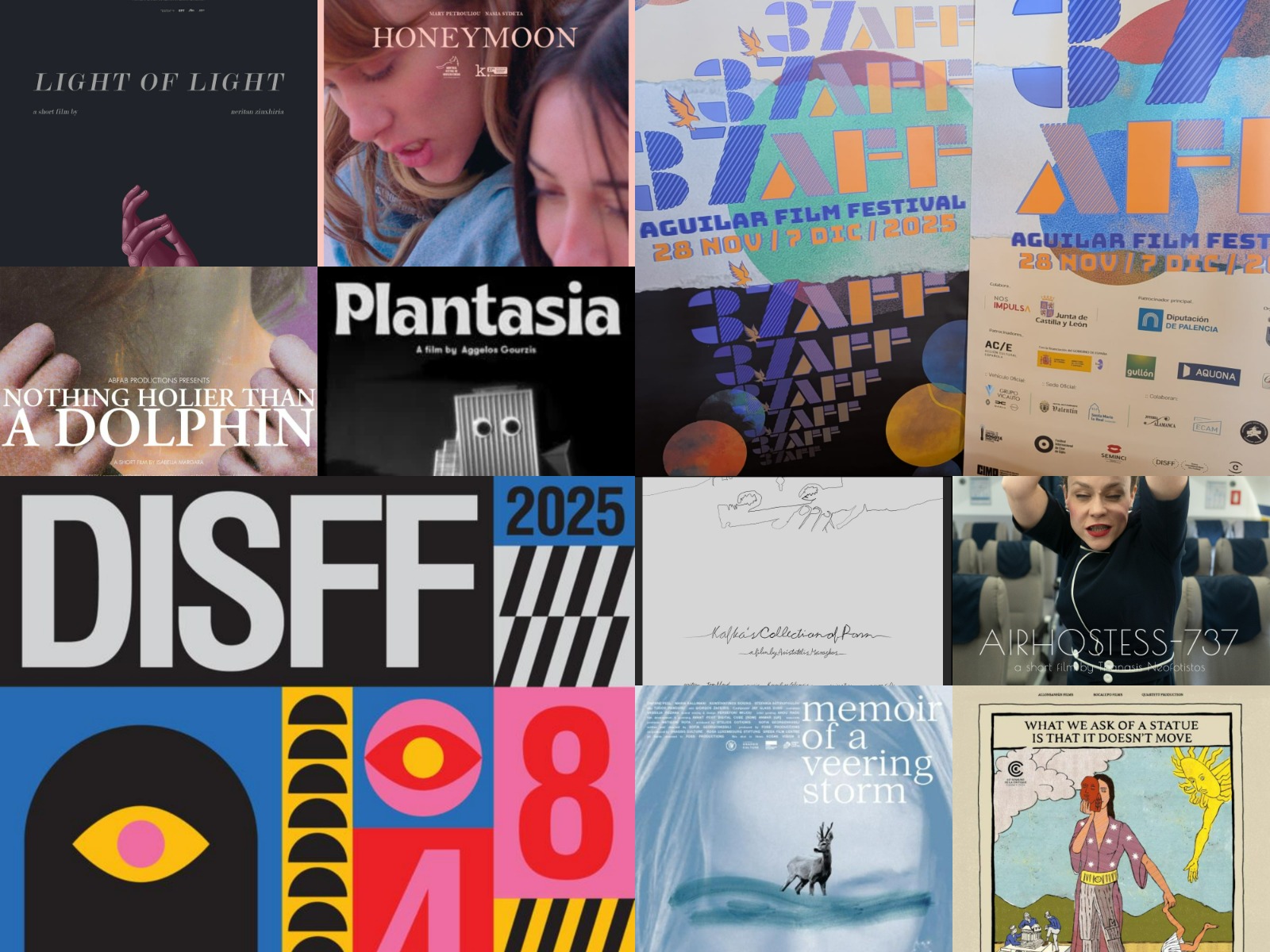
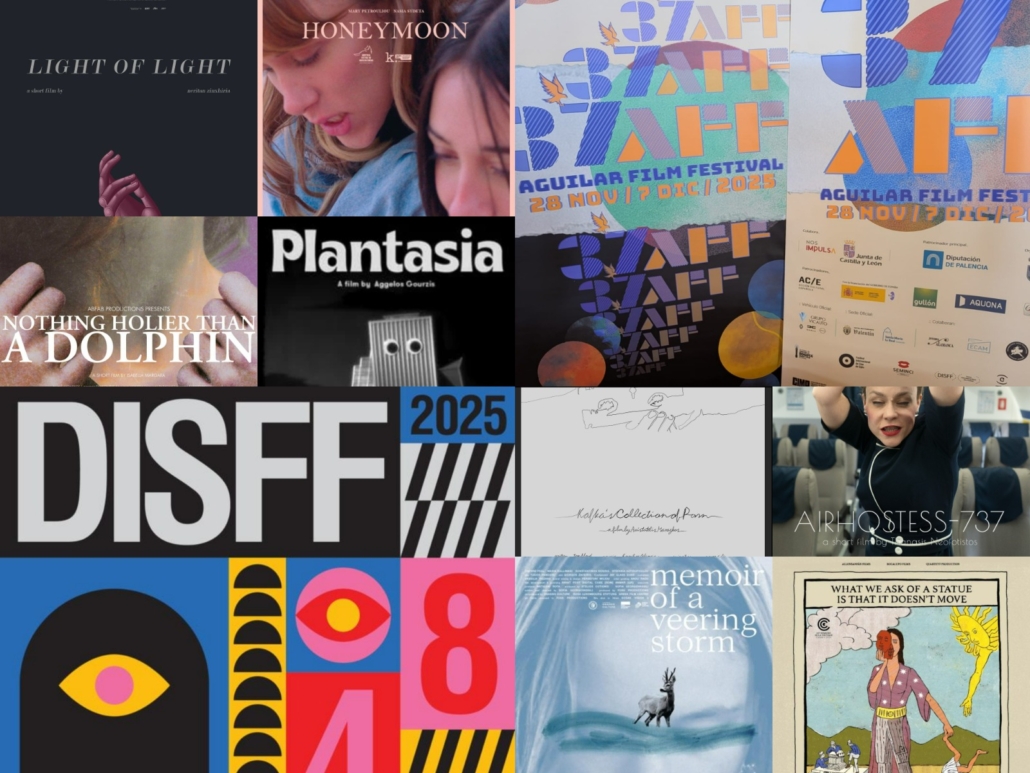
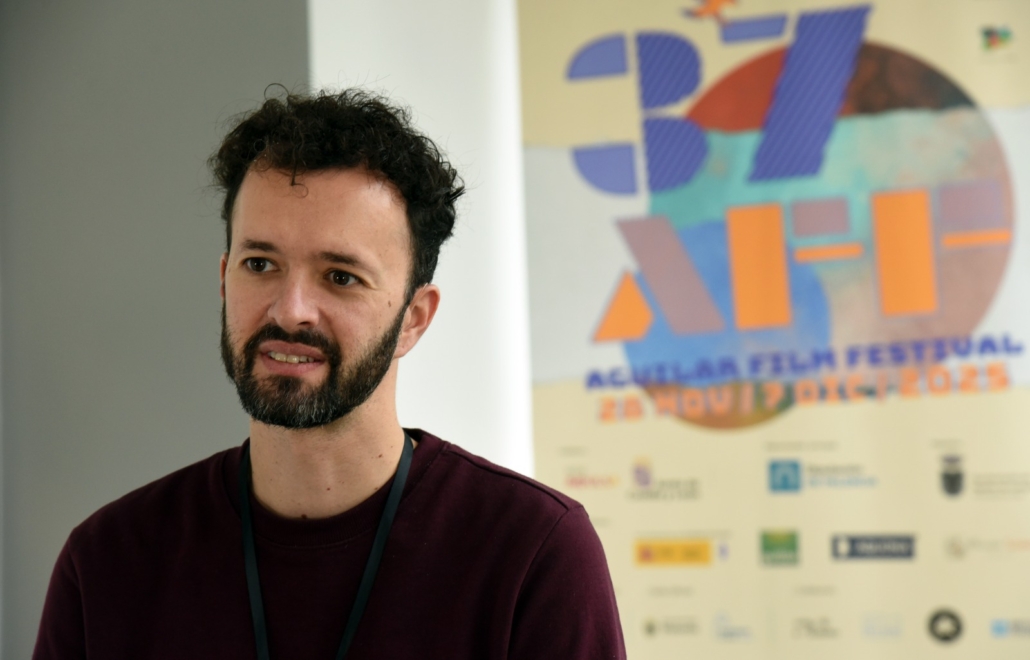
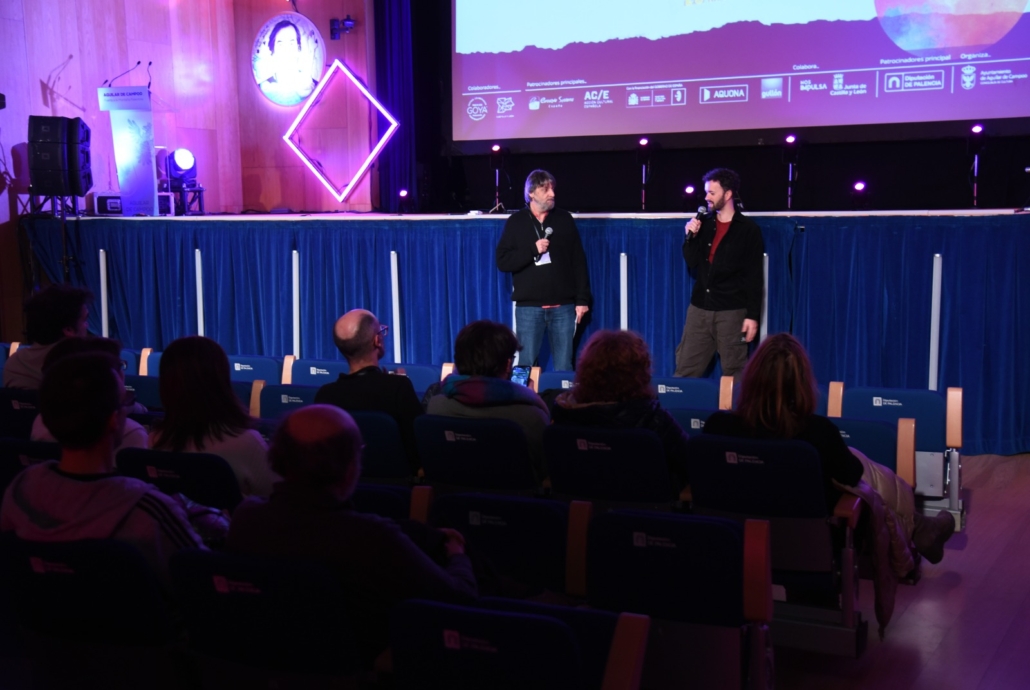
This year, the festival turned its gaze toward the Aegean Sea with Focus Greece: DISFF, a special collaboration with the Drama International Short Film Festival (DISFF), Greece’s most important short film event. The programme brought contemporary Greek cinema to northern Spain through eight remarkable short films and the presence of Yorgos Angelopoulos, Artistic Director of DISFF, as an international guest of honor.

For Angelopoulos, the invitation to Aguilar de Campoo represented both an honor and an opportunity to strengthen the international circulation of Greek short films. “It was a great joy and an honour for the Drama Festival to be present in Aguilar this year, because we believe that the more Greek filmmakers’ works travel—especially to festivals far from our own—the more easily their message and talent can be shared,” he explained. According to him, festivals like Aguilar and Drama are united by a shared mission: discovering emerging voices and offering them platforms where their films can connect with new audiences.

Short Films in Focus Greece: DISFF

The DISFF section presented eight short films that capture the pulse of contemporary Greek filmmaking, spanning fiction, animation, and diverse narrative approaches:

  • Honeymoon – Alki Papastathopoulos
  • Kafka’s Collection of Porn – Aristotelis Maragkos
  • Light of Light – Neritan Zinxhiria
  • Nothing Holier than a Dolphin – Isabella Margara
  • Memoir of a Veering Storm – Sofia Georgovassili
  • What We Ask of a Statue is that it Doesn’t Move – Daphné Hérétakis
  • Plantasia – Aggelos Gourzis
  • Airhostess-737 – Thanasis Neofotistos

Together, these works formed one of the festival’s most heterogeneous and solid selections, blending mythology and politics, realism and spirituality, humor and tragedy. Angelopoulos acknowledged that selecting the programme was far from easy: “It was very difficult to choose the films, because in recent years Greek short filmmaking has produced works of great quality across very different genres and themes.”

Despite limited production resources, Greek short films have achieved remarkable international recognition. “Greek filmmakers, with very limited means, manage to create works that can compete with much larger productions,” Angelopoulos noted, pointing out that creativity and a strong personal vision have become defining traits of the contemporary Greek short film scene.

Festivals with a Shared Mission

During his stay in Aguilar, Angelopoulos drew a clear parallel between the Drama Festival and the Aguilar Film Festival, highlighting their closeness in goals and spirit. Both festivals, he emphasized, are dedicated to discovering new talent and supporting emerging creators at the beginning of their careers. Rejecting any sense of rivalry, he underlined collaboration between festivals as essential to the vitality of cinema, stressing that international exchange benefits filmmakers, festivals, and audiences alike.

Beyond screenings, the Drama Festival’s commitment to new creators extends through a strong educational framework, including the Short Film Hub, talks, activities, and masterclasses that provide young filmmakers with tools for their first professional steps. This philosophy resonated strongly in Aguilar, where the Greek programme was conceived not only as a showcase but also as an act of cultural outreach.

Aggelos Gourzis and Plantasia: Optimism as Resistance

One of the standout works was Plantasia by Aggelos Gourzis, an animated short that approaches the climate crisis from a perspective of hope rather than despair. “Our neglect of nature becomes our downfall, but I didn’t want to stop there,” Gourzis explained. Instead, the film proposes coexistence over conflict: “I wanted the audience to leave with more confidence in ourselves, in the possibility of walking alongside nature and not against it.”

Created as his graduation film at Western Attica University, Plantasia was shaped under intense time pressure. “I had less than three months to submit the film or risk being expelled,” he recalled. That urgency ultimately became liberating, pushing him to trust intuition over perfectionism. Its selection in Aguilar exceeded his expectations and reaffirmed the importance of short films in Greece as a space for experimentation and authorship.

Isabella Margara: When Myths Breathe Again

In Nothing Holier than a Dolphin, Isabella Margara reanimates mythology through cinema and physical theater. “In a small Mediterranean town, an ancient myth unexpectedly comes to life,” she explained. Drawing on myths from both the island of Samos and the Arctic Circle, Margara constructed what she described as “a modern vision combining different mythological traditions.”

The production faced serious obstacles, including the loss of initial funding and a sudden pregnancy shortly before shooting. “It was a disaster in many ways, but I knew I had to move forward,” she recalled. The decision paid off: the film won the Audience Award at Clermont-Ferrand and has screened more than 130 times worldwide. For Margara, this success confirmed the enduring power of storytelling: “Storytelling is a deeply human trait, no matter the country.”

Thanasis Neofotistos and Airhostess-737: Turbulence, Grief, and Humor

Thanasis Neofotistos contributed Airhostess-737, a tragicomic short combining grief, fantasy, and dark humor. Inspired by a dream during therapy, the film follows a flight attendant transporting her mother’s body while the plane encounters severe turbulence. “It’s a story about loss and understanding your mother,” Neofotistos explained.

Once again, limited resources fueled creativity. Unable to film inside a real aircraft, the team built a full-scale set, turning the plane itself into a living presence. Reflecting on Greek short cinema, Neofotistos observed: “We are very strong in this format. The challenge lies in building the bridge toward feature films.”

DISFF in Aguilar

Conceived as a window into the momentum of contemporary Greek cinema, Focus Greece: DISFF gave greater visibility to young Greek filmmakers while offering Aguilar’s audiences the opportunity to discover a cinematography they might not yet have encountered. As Angelopoulos summarized, the ultimate goal was inspiration and connection: “Communication between a film and its audience is the true purpose of the cinematic experience.”

In Aguilar, where the aroma of cookies mingles with a deep passion for cinema, Greece found a welcoming home—and viewers discovered some of the most compelling voices in contemporary short filmmaking.

To DISFF ταξιδεύει στο Εθνικό Μουσείο Σύγχρονης Τέχνης (ΕΜΣΤ)

Drama International Short Film Festival “travelled” for the first time to the National Museum of Contemporary Art (EMST).

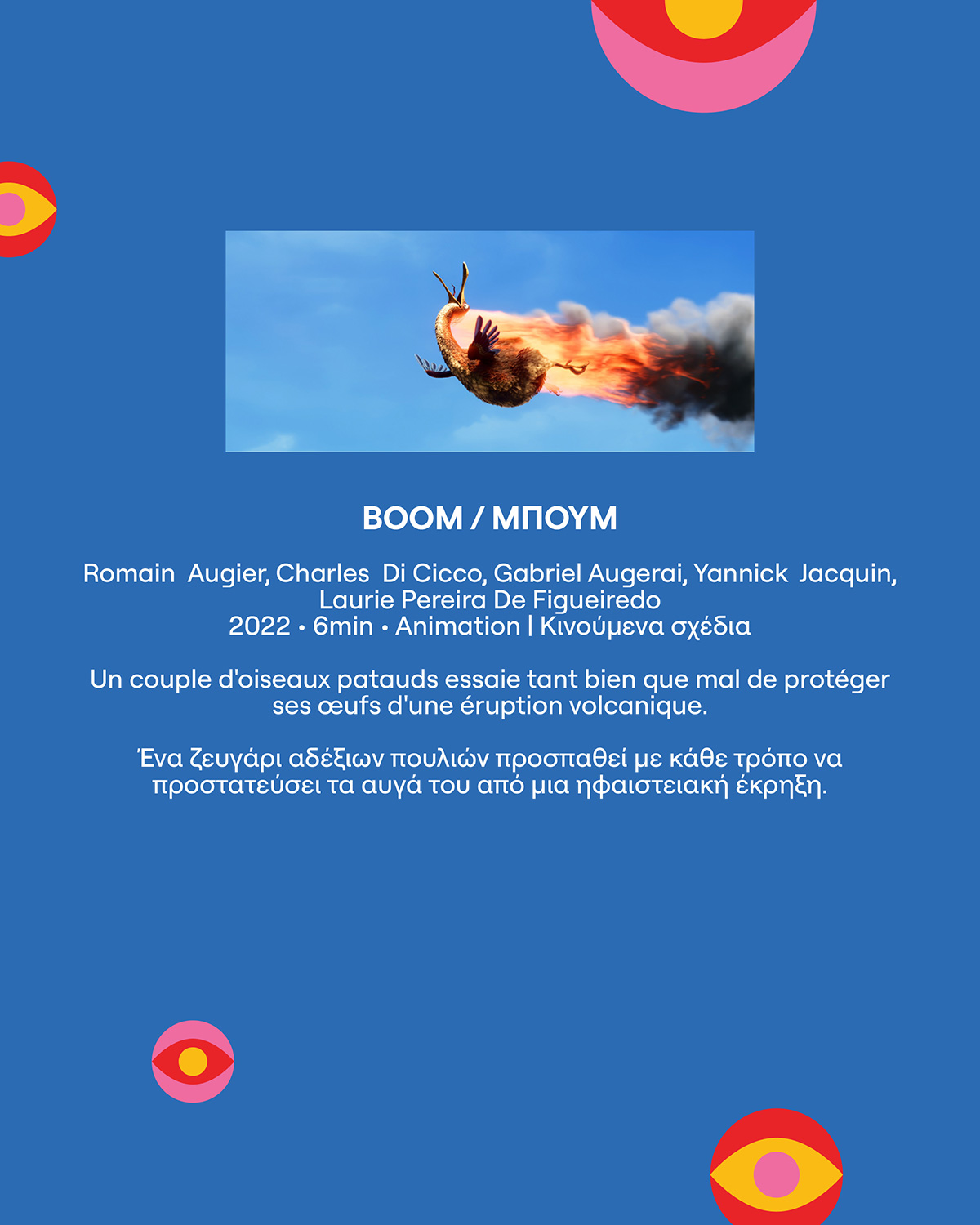
In collaboration with CineFIX, on Thursday, December 11 at 20:00, and within the framework of the exhibition “Why Look at Animals? A Case for the Rights of Non-Human Lives”, it presented a a special film evening featuring five new short films from Greece and abroad.

These works form a cinematic tribute to the relationship between humans and animals, challenging the dominant perception of non-human animals as commodities for human use and highlighting the intrinsic value of non-human life.

From documentaries capturing the realities of non-human existence in technological and urban environments to fictional works exploring lyrical, ethical, and emotional entanglements, each film opens up a shared space for reflection on the worth of life beyond the human.

Leila Fatima Keita, Felix Klee

Accidental Animals, 2024
10′

Film School: University of Television and Film Munich
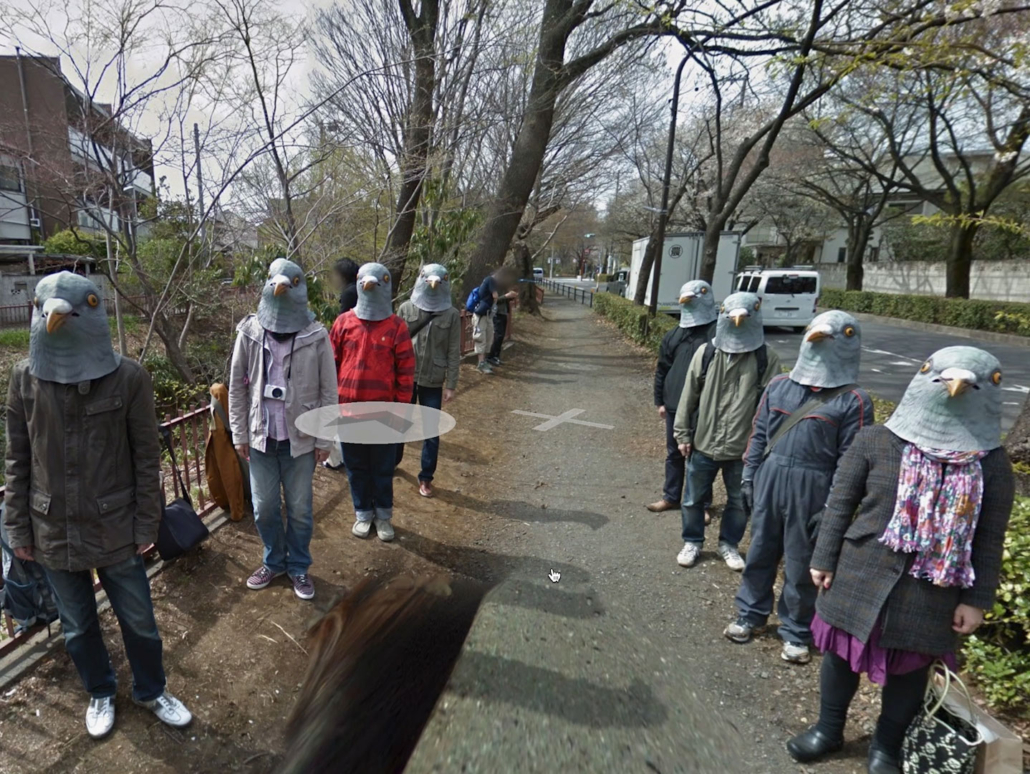
While cartographing the world, the Google Street View car sometimes crosses paths with animals. The film examines these encounters between the machine of technical reproduction and creatures like spiders, donkeys, or dogs.

Neritan Zinxhiria

Noi, 2025
15′

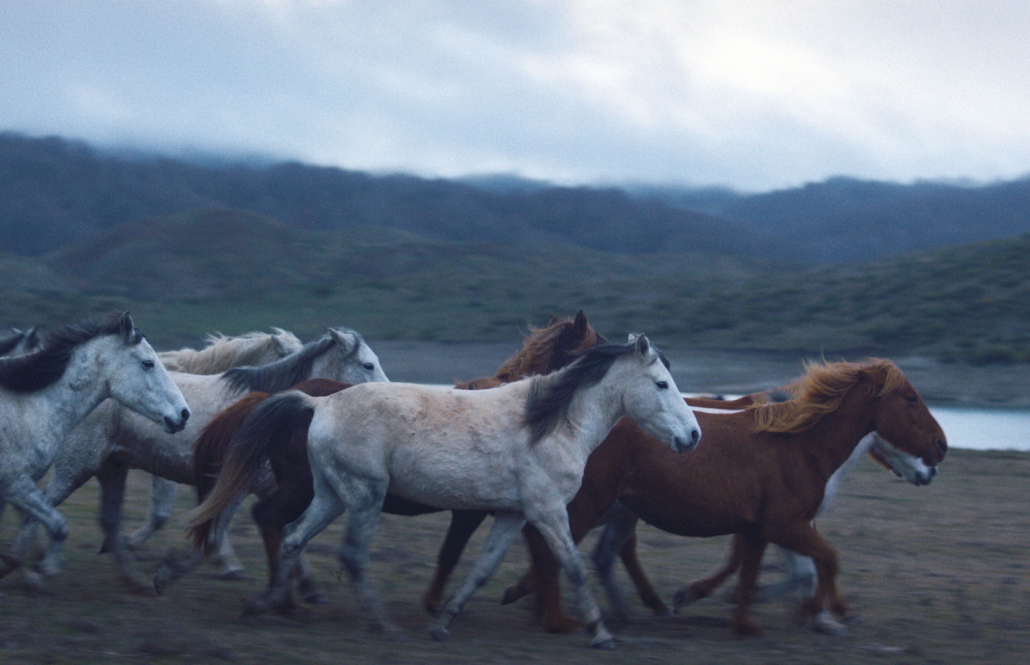
Revenge whispers: at what temperature does blood boil upon snow? When the older brother is killed by his beloved horse, the younger must decide—through nightmares and visions—whether to take the creature’s life or grant it forgiveness.

Lena Dandanelle, Carolin Kubut, Lea Majer

We Used to Be Friends , 2024
6′

For a long time they were an integral part of our society, today they live neglected in our cities and are deemed a problem. The pigeon is a relic of the past that still affects us today

Carlo Galbiati

Should Virtual Petz Die?, 2025
12′

Film School: Nouvelle Bug
After a computer crash, a girl struggles with the loss of her long-time virtual pet, Bubba.

Simon Schneckenburger

Skin on Skin, 2025
29′

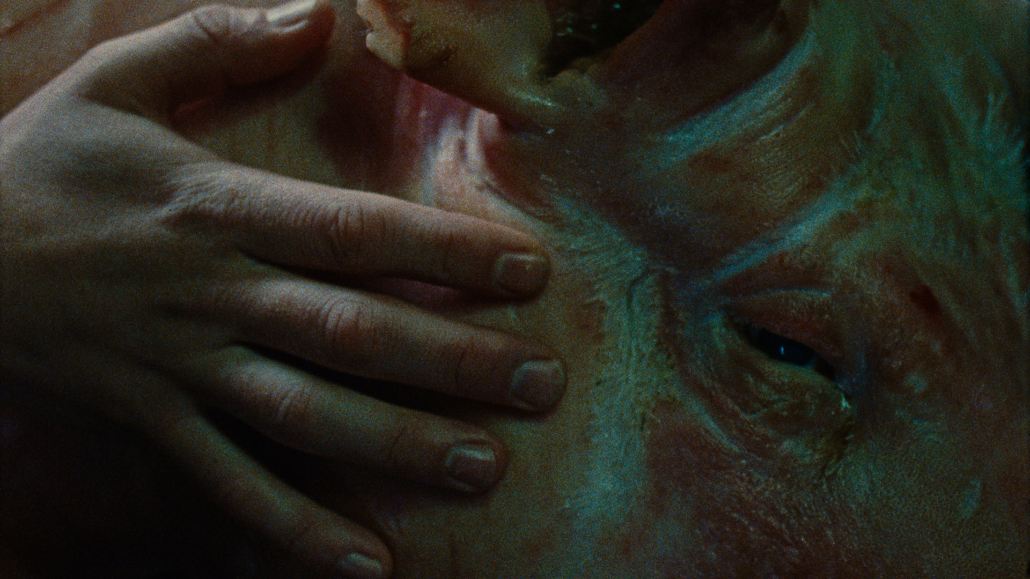
Two men displaced in the hell of the German meat industry. Something lies between them. Something makes them dream again.

Οι πιο μικρές μέρες

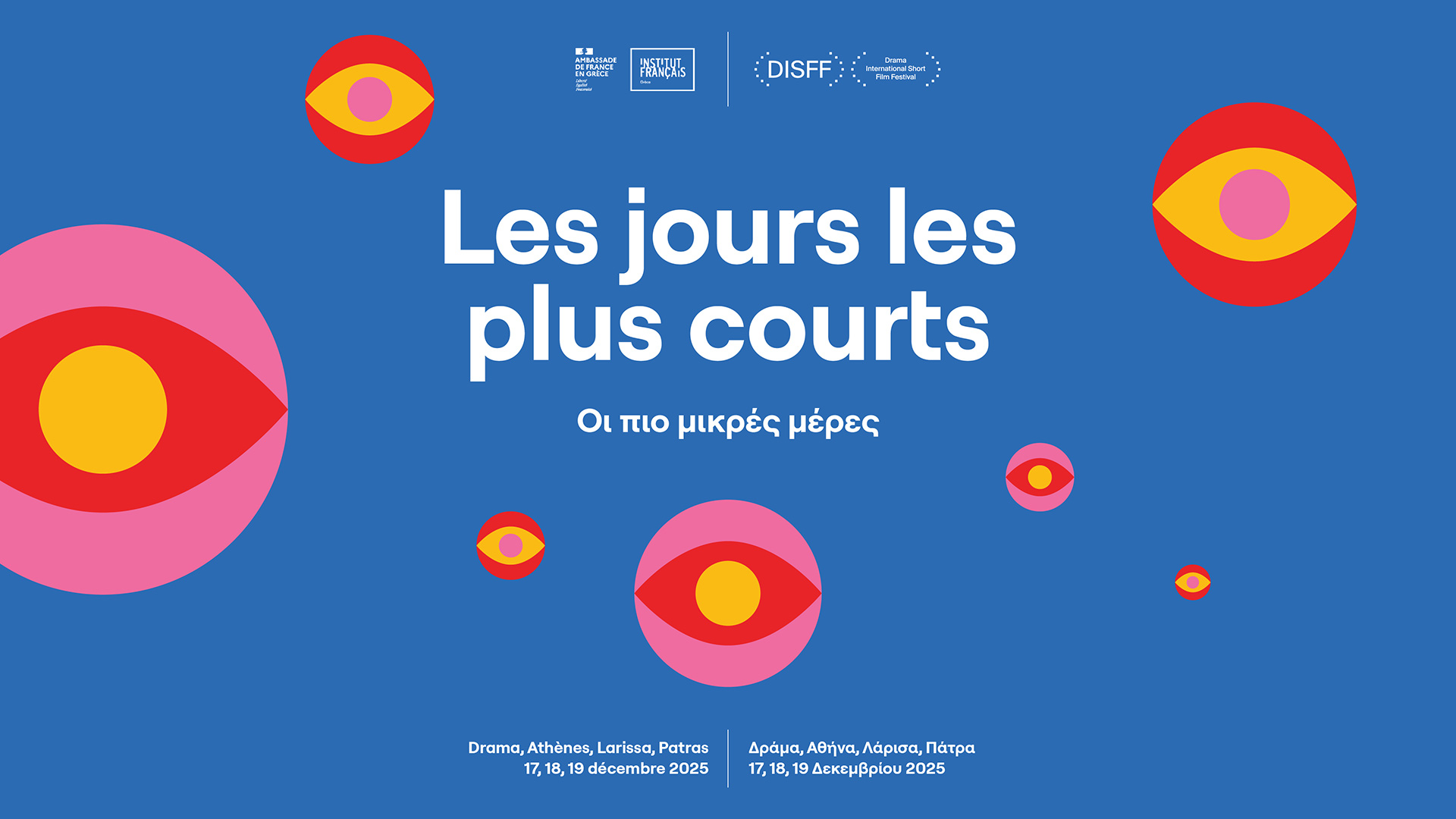
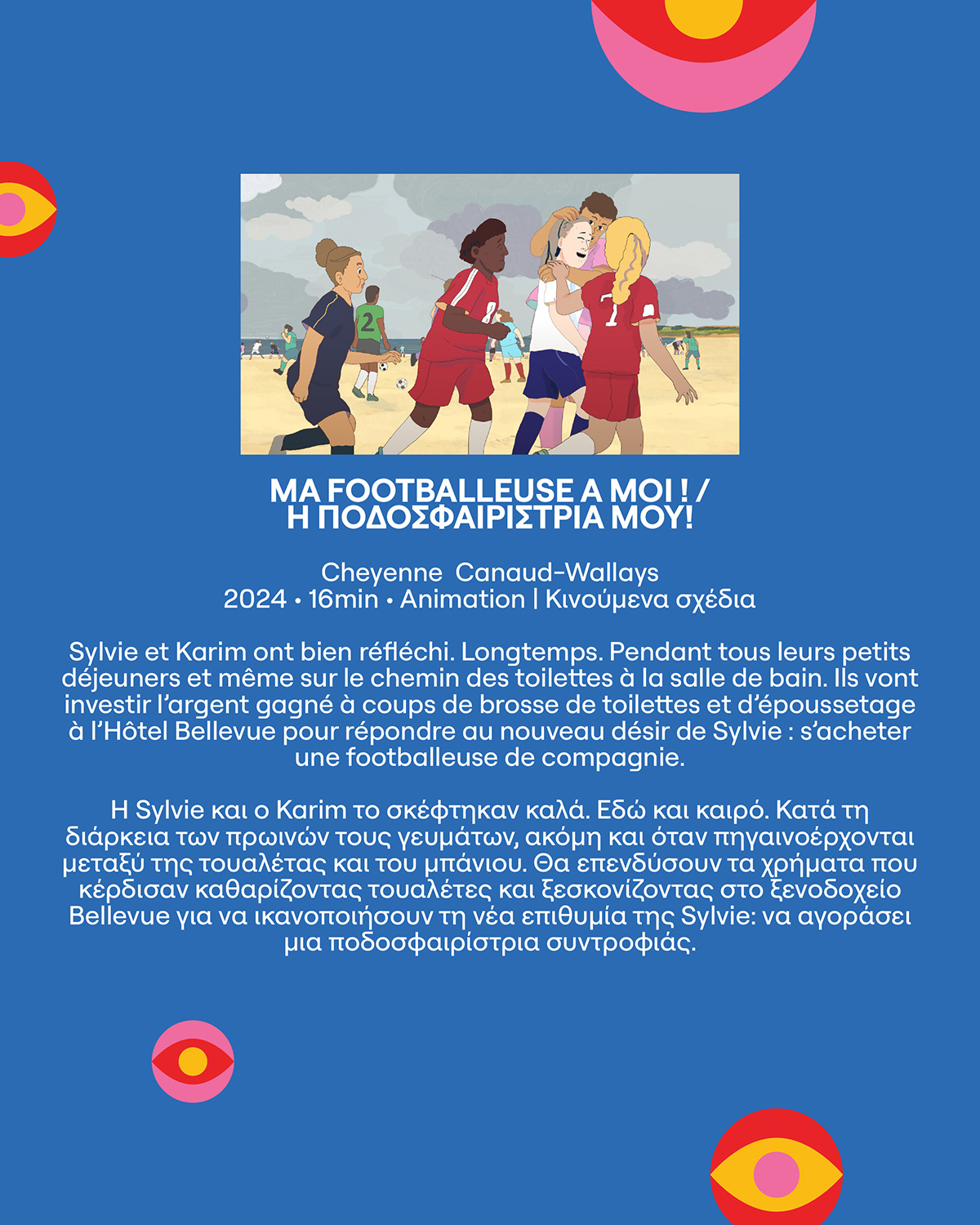
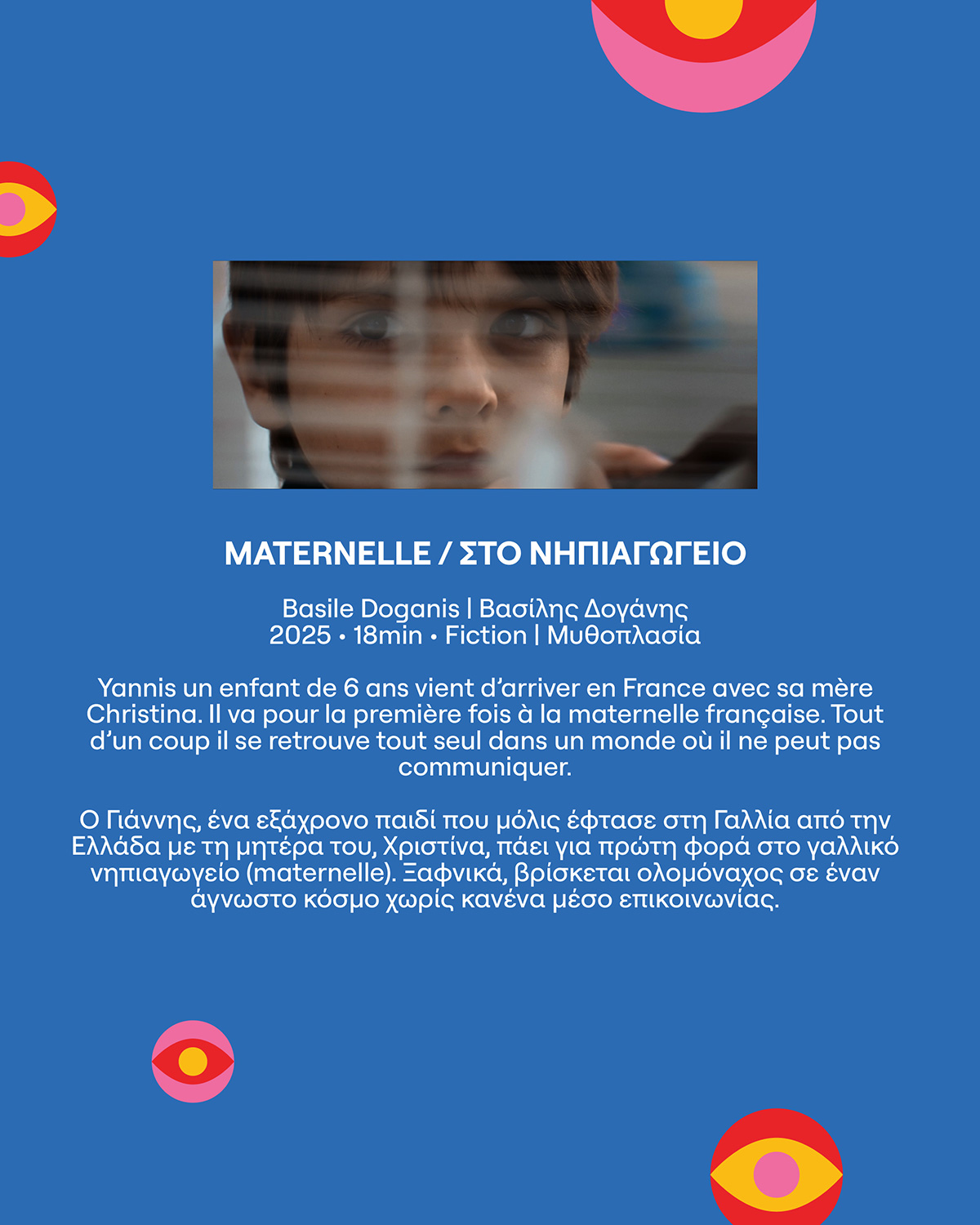
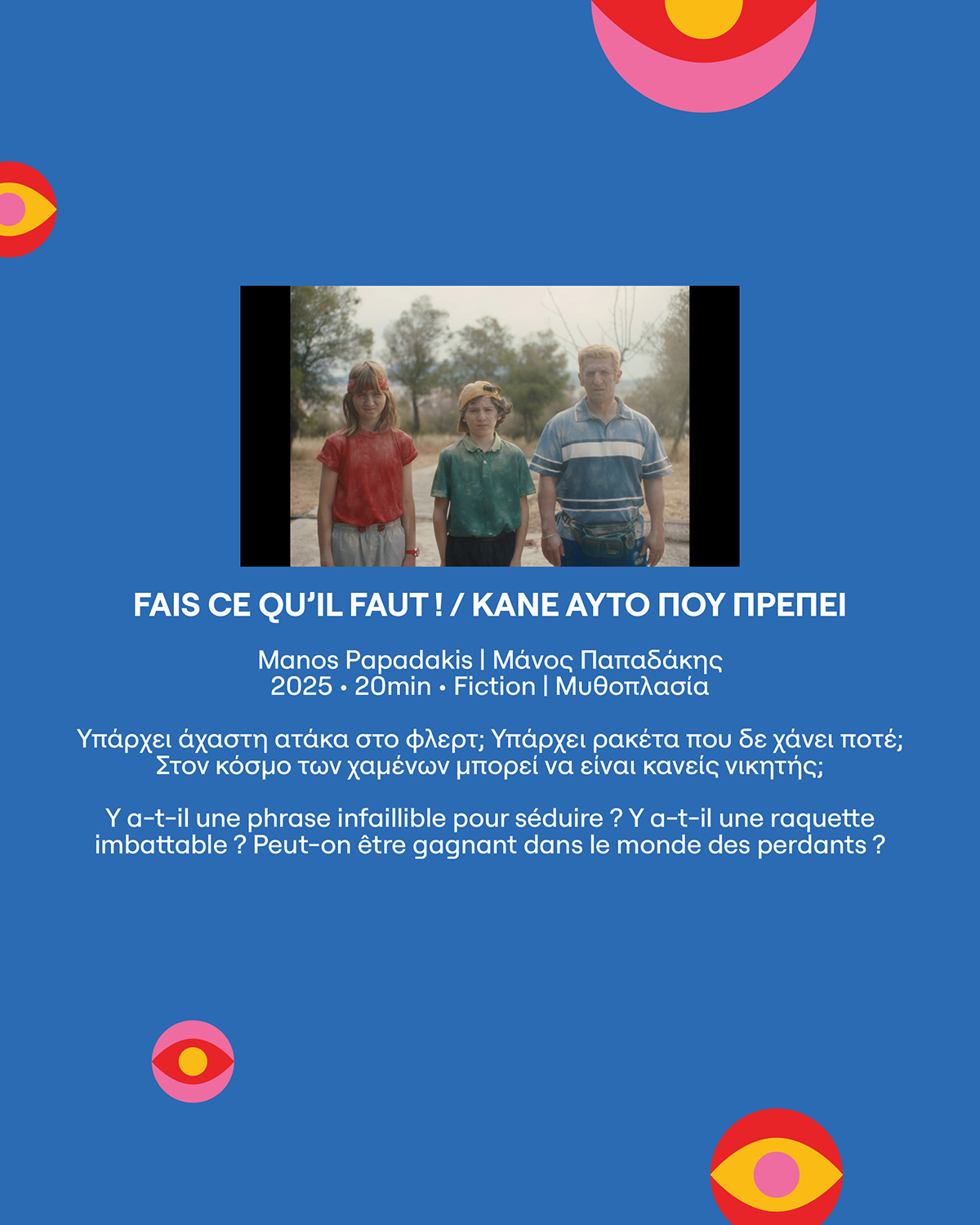
The Drama International Short film festival in collaboration with the French Institut of Greece is presenting the SHORTEST DAYS of the year the programme :Les jours les plus courts” for the youngest cinephiles in:

Drama, Athens, Patras, Larissa, Thessaloniki

Οι πιο μικρές μέρες

Οι πιο μικρές μέρες

Οι πιο μικρές μέρες

Οι πιο μικρές μέρες

Οι πιο μικρές μέρες

Οι πιο μικρές μέρες

trianon 2025

DISFF TRAVELS TO ATHENS – THE GREEK FILMS  OF THE 48th DISFF

AT TRIANON CINEMA
NOVEMBER 20-23, 2025
(21 Kodrigktonos Str.)

On November 20-23, the 48th International Short Film Festival of Drama, following its successful completion, travels to Athens and brings the Greek films from this year’s competition programs to the TRIANON cinema (21 Kodrigktonos Street).

The entire national competition program of DISFF48 will be screened, along with the Greek films and Greek co-productions that competed in the international sections: Kiddo, Short & Green, Animation, and International Competition.

Directors will be present.

Screening times:

Thursday, Friday, Saturday, and Sunday: 7:00 p.m. and 9:00 p.m.
On Sunday at 5:00 p.m., there will be an extra screening for our younger friends, featuring films that competed in the Kiddo program.

Trailer:

#DISSF48 ΤΟ ΦΕΣΤΙΒΑΛ ΔΡΑΜΑΣ ΤΑΞΙΔΕΥΕΙ ΣΤΗΝ ΑΘΗΝΑ – ΤΡΙΑΝΟΝ 2025

DISFF IN ATHENS schedule:


Advance Ticket Sales:


WHAT SHALL WE WATCH ΙΝ TRIANON

Among the films we will watch is Noi by Neritan Zinxhiria, which won this year’s GOLDEN DIONYSUS award, as well as many films premiering in Athens, including Michalis Gigidis’ 100 Years Ahead, Alexandros Chantzis’ Fuit, and Myrto Apostolidou’s The Circles of Ro.

Dozens of well-known actors star in the films, including Maria Skoula, Antonis Tsiotsiopoulos, Andreas Konstantinou, Sofia Kokkali, Haris Fragoulis, Elena Topalidou,  Charis Tzortzakis, Makis Papadimitriou, Lena Kitsopoulou, Evelina Papoulia, Thanos Tokakis, Youla Boudali, Penelope Tsilika, Dimitra Vlagopoulou, and many other talented new faces.

We will also enjoy the amazing performances of Filia Papangelidi, who won the Best Female Performance Award ((Mitsi), and Aris Balis, who won the Best Male Performance Award (He Who Once Was).
Once more this year, social issues and relationships were the main focus; loss, mother-daughter relationships, pregnancy, first menstrual period, alienation. Animals and children play a leading role in several films, with children’s perspective and imagination coming to the fore and occupying a significant part of this year’s film themes.

The hot issues that trouble modern Greece continue to inspire short film makers one more time: the far right, bankruptcy, corruption, homophobia, immigration, the search for identity, drugs, prostitution, but also references to the recent political past. The lockdown continues to leave its mark on cinema, while we will also watch films inspired by the nightlife, as well as by cinemas that are closing down in the name of profit. The business of death in cemeteries, and the unconditional surrender to the tourism industry, have also served as raw material for some other creators.

However, the program is further enriched by a new distinct trend: films featuring mythical creatures such as vampires, mermaids, and zombies, but from an LGBTQ+ angle. At the same time, we also find hybrid films and mockumentaries (fiction films presented as documentaries) that can fool even the most experienced eye.

On the Festival website, you will find all the films participating in the Festival’s competition sections.

The complete list of awards for the 48th DISFF can be found here:

https://www.dramafilmfestival.gr/en/48th-disff-awards/

Tickets: €5, €3 for young people under 25, €20 pass for all screenings.

The Drama International Short Film Festival is organized with the full support of the Municipality of Drama.

ΤΑ ΝΕΑ ΤΟΥ ΦΕΣΤΙΒΑΛ Βραβεία 48ου Διεθνούς Φεστιβάλ Ταινιών Μικρού Μήκους Δράμας 2025

National Competition, International Competition, International Short & Green, International Kiddo Program, Independent Jury Awards

NATIONAL COMPETITION PROGRAMME AWARDS 2024

Jury:

  • Maria Kallimani, actor
  • Elsa Lekakou, actor
  • Dimosthenis Papamarkos, writer, screenwriter
  • Andreas Sinanos, director of photography
  • Aggelos Frantzis, director

Head Programmer:
Yorgos Aggelopoulos 

GOLDEN DIONYSUS – BEST FILM AWARD

‘Noi’, Neritan Zinzhiria

Jury Reasoning: For its rough yet tender point of view, its simple yet bold choices, that mystically lead the viewer to the core of human experience.

*The winner gets one of two DISFF tickets on the long list of nominees for the Short Film Oscar Awards.

**The award is accompanied by two prizes: Finos Film, ERT and Greek Film Center offer a prize of 10,000 euro. The winner automatically gets selected to participate in Thessaloniki Film Festival’s Agora Short Film.

SILVER DIONYSUS – “TONIA MARKETAKI” BEST DIRECTION AWARD

‘He Who Once Was’, Kostis Theodosopoulos

Jury Reasoning: For masterfully refreshing the genre codes, for its artistic thoroughness and excellent actor directing.

*The award is accompanied by three prizes: ERT and Greek Film Center offer a prize of 10,000 euro. Post Production services worth 2,500 euro provided by Stefilm. The winner automatically gets selected to participate in Thessaloniki Film Festival’s Agora Short Film.

DOCUMENTARY AWARD

‘Requiem in Salt’, Sylvia Nikolaides- Nikolas Iordanou

Jury Reasoning: For its perfect consistency in form and content, for its high aesthetics and low-voiced narration that turns personal mourning into an artistic and spiritual experience.

*The award is accompanied by three prizes: ERT and Greek Film Center offer a 4,000 euro prize. Post Production services worth 2,500 euro provided by Stefilm. A LED lighting system, provided by Manios Cine Tools and Amaran companies.

SPECIAL JURY AWARD

‘Dust to Dust’, Dimitris Papathanasis

Jury Reasoning: For the way it truthfully weaves a world of corruption and conflict, by balancing between tragedy and farce, and for its actors’ performance that make up a rare ensemble.

DRAMA QUEER AWARD

‘He Who Once Was’, Kostis Theodosopoulos

Jury Reasoning: For the creative way it brings vampire myths that have often been used as metaphors for queer love to today’s world and for the way it finally transforms into a modern, emancipating and liberating narrative.

*The award is accompanied by a 5-year Premium Crew United Pass, provided by Crew United.

BEST SCRIPT AWARD

Yannis Symvonis and Yorgos Aggelkos

[‘Mikro Soma’, by Yannis Symvonis]

Jury Reasoning: For its elliptical dramaturgy that gradually unravels the film’s theme, without a trace of exposure or pretentious mystery.

*The award is accompanied by a prize of 3,500 euro, provided by the Greek Film Centre.

BEST FEMALE PERFORMANCE AWARD

Filia Papaggelidi

[‘Mitsi’, by Gevi Dimitrakopoulou]

*The award is accompanied by a 5-year Premium Crew United Pass, provided by Crew United.

BEST MALE PERFORMANCE AWARD

Aris Balis

[‘He Who Once Was’, By Kostis Theodosopoulos]

*The award is accompanied by a 5-year Premium Crew United Pass, provided by Crew United.

BEST PHOTOGRAPHY AWARD

Konstantinos Koukoulios

[‘Last Tropics’, by Thanasis Troumpoukis]

*The award is accompanied by two prizes: A 500-euro prize offered by ISOCRATES Copyright Management Organisation. A hybrid Canon Kit consisting of a camera and lenses set, provided by Canon.

BEST EDITING AWARD

Yannis Karpouzis

[‘Magdalena Hausen: Frozen Time’, by Yannis Karpouzis]

*The award is accompanied by two prizes: A 500-euro prize offered by ISOCRATES Copyright Management Organisation. Film and video editing software, Avid Media Composer by Avid Technology, provided by Telmaco.

ORIGINAL MUSIC AWARD

Alexandros Sidiropoulos

[‘Loudias’, by Akis Polyzos]

*The award is accompanied by Pro Tools Studio software by Avid Technology, provided by Telmaco.

SET DESIGN AWARD

Sofia Vaso, Lydia Myligou

[‘Last Tropics’, by Thanasis Troumpoukis]

*The award is accompanied by a 500-euro prize offered by ISOCRATES Copyright Management Organisation

“IOULIA STAVRIDOU” COSTUME AWARD

Johanna Schraut

[‘Magdalena Hausen: Frozen Time’, by Yannis Karpouzis]

*The award is accompanied by a 500-euro prize offered by ISOCRATES Copyright Management Organisation

BEST SOUND AWARD

Dimitra Xeroutsikou, Aris Pavlidis

[‘Wolves Return’, by Stelios Moraitidis]

*The award is accompanied by two prizes: a 500-euro prize offered by ISOCRATES Copyright Management Organisation. Technical equipment worth 1,700 euros provided by Manios Cine Tools and Deity Microphones.

BEST SOUND DESIGN AWARD

Leandros Dounis

[‘Last Tropics’, by Thanasis Troumpoukis]

*The award is accompanied by Pro Tools Studio software by Avid Technology, provided by Telmaco.

MAKE-UP AND HAIR STYLING AWARD

Dimitra Giatrakou

[‘He Who Once Was’, by Kostis Theodosopoulos]

*The award is accompanied by a 5-year Premium Crew United Pass, provided by Crew United.

SPECIAL EFFECTS AWARD

Nikos Pittas

[‘Nothing and Everything’, by Lia Tsalta]

*The award is accompanied by a 5-year Premium Crew United Pass, provided by Crew United.

SPECIAL MENTION

Yorgos Frentzos

[‘Magdalena Hausen: Frozen Time’, by Yannis Karpouzis]

Jury Reasoning: For his unique contribution in the creation of a hybrid film whose artistic boldness and impressive truthfulness constructs an entire era.

HONORABLE MENTION

‘Things Hidden Since the Foundation of the World’,

Kevin Walker- Eirini Zachariades

Jury Reasoning: For its authenticity and tenderness, for its delicate and bizarre humour that finds balance with melancholy, presenting the loneliness of the life of a small community in an isolated island.

INTERNATIONAL COMPETITION PROGRAMME AWARDS

JURY

  • Katerina Gregou, National Modern Art Museum, artistic director
  • Panagiotis Evaggelidis, director, screenwriter
  • Helena Wittman, director, photography director

Head Programmer:
Vasilis Terzopoulos

Grand Prix

‘Correct me If I’m Wrong’, Hao Zhou (Germany, USA)

Jury Reasoning: For its sweet and compassionate depiction of an attempt to bridge deeply rooted differences within a family

*The winner gets one of two DISFF tickets on the long list of nominees for the Short Film Oscar Awards.

**The award is accompanied by a 5,000-euro prize, provided by the company Raycap.

BEST DIRECTION AWARD

‘Casa Chica’, Lau Charles (Mexico)

Jury Reasoning: For its emotional approach to a family drama by different points of view with compassion and an open mind.

*The award is accompanied by a 1,500-euro prize.

EFA CANDIDACY DRAMA 2025 – European Film Academy Award Nomination for Best Short Film

Drama Festival as part of the European Film Academy, along with 29 other festivals, offers a film in the Academy’s candidacy list for the Best Short Film Award

 ‘Loynes’, Dorian Jespers

(Belgium, France, North Macedonia, United Kingdom)

Jury Reasoning: For questions usual film conventions, its absurd theatricality, its satiric approach, its non-conventional format and its open to interpretation narrative.

BEST SOUTHEASTERN EUROPEAN FILM AWARD

‘400 Cassettes’, Thelgia Petraki (Greece, Germany)

Jury Reasoning: For its dreamlike exploration of our desire to delve into the unknown and talk to the stars.

*The award is accompanied by a 1,000-euro prize.

BEST PRODUCTION AWARD “TV5 MONDE”

‘Tragédia’, Bernardo Zanotta (Netherlands, Brazil, France)

Jury Reasoning: For its ad-hoc creativity and its playful transformation of material, and its connection to youthful imagination to adult reality.

SPECIAL MENTION

‘No Mean City’, Ross McClean (United Kingdom)

Jury Reasoning: For its discrete approach to the meaning of change.

INTERNATIONAL SHORT AND GREEN AWARDS

Jury:

Dimitris Kapouranis, actor
Smaro Papaevaggelou, editor, director
Neil Young, film critic, festival program curator

Head Programmer:
Maya Sfakianaki

BEST FILM AWARD

‘Common Pear’, Gregor Božić (Slovenia, United Kingdom)

Jury Reasoning: The past is the crossroads between what is already decided and the future, that remains open. The need to act now, individually and all together, is outlined in this bold film that covers an impressive thematic range, despite its short duration. The roots of many genres are intertwined into a hybrid film that represents artistic ‘recycling’. Through the wreckage of a ruinous dystopia that can still be avoided, the film discovers a seed of hope. Human warmth, humour, and resilience are the superpowers that can support our species with a little help from cinema as an experience that ‘we must share, feel, and watch’

*The award is accompanied by a 4,000-euro prize by CYCLOPS Urban Non Profit Company

SPECIAL JURY AWARD

‘Green’, Dimitris Iosifidis Hokmetidis (Greece)

Jury Reasoning: For its direct and convincing approach, based on trust and compassion developed between the director and those being filmed. It’s a depiction of masculinity, work, and loneliness through an environmentally conscious setting, that engulfs larger political aspects. The film represents something new and fresh for Greek documentaries.

SPECIAL MENTION

‘Darwin’s Darlings’, IIdze Terēze Felsberga, (Latvia)

Jury Reasoning: We also want to congratulate Ansis Landorfs for the direction of photography.

INTERNATIONAL KIDDO COMPETITION PROGRAM AWARDS

The jury consists of the following Drama pupils: Anastasia Antoniadou, Christos Kostis, Anastasia Bountouri, Evaggelia Mytilinaiou, Ourania Hatzikourti

Head Programmer:
Yorgos Aggelopoulos

BEST KIDDO FILM

‘Little Rebels Cinema Club’, Khozy Rizal (Indonesia)

Jury Reasoning: For the protagonist’s moving attempt to transport his friends to the magical world of cinema through a camera, that symbolizes family, friendship, and future dreams, and made us film that dreaming bid starts by conquering small.

*The award is accompanied by a 1,500 euro prize by Emil Kakkis in memory of his grandparents Emilios and Elvira Kakkis, owner of Drama’s first cinema theatre named ‘Mega Cinema’, that years later was renamed ‘Olympia’.

“DREAMERS” – Best film (Professional Category)

‘Fall Christmas’, Kostas Bakouris (Greece)

Jury Reasoning: For showcasing how families with health issues feel. We were touched by the protagonist’s attempt to express his love for his sister, by creating a Christmas musical during fall.

* The award is accompanied by a 1,500 euro prize by Emil Kakkis in memory of his grandparents

“RISING KIDDO” – Best film (Young Filmmakers Category)

‘The Magic Portal’, Collective 18 Children (Belgium)

Jury Reasoning: For its impressive animation and for showing the value of teamwork and collaboration through the honest eyes of children.

*The award goes to the best film by a child director and comes with a 1,500-euro prize, provided by Emil Kakkis in memory of his grandparents.

SPECIAL JURY AWARD

‘Atlantic’, Alexandros Stamatiadis (Greece)

Jury Reasoning: For its excellent scenography, its warm ambience and humour. For its attempt to create emotions that end up being expressed by life itself.

SPECIAL MENTION

‘Feet Up’, Olli IIpo Salonen (Finland, Lithuania)

Jury Reasoning: For showing us the two opposite worlds of children and parents, trying to find ways to coexist. When things turn upside down, ‘no’ turns into acceptance and understanding.

INDEPENDENT JURY AWARDS

“HUMAN VALUES” AWARD BY THE HELLENIC PARLIAMENT

‘I’m Glad You’re Dead Now’, Tawfeek Barhom (Greece, France, Palaistine)

Jury Reasoning:  When two brothers return to their birthplace for their father’s funeral, the film’s delicate and masterful approach of trauma from child abuse is highlighted whilst also showing the comfort of a brotherly bond.

*The award is given to an International Competition Program film and is accompanied by a 1,500-euro prize, offered by the Hellenic Parliament.

INTERNATIONAL FEDERATION OF FILM CRITICS (FIPRESCI) AWARD

‘When You Were Young Were You Afraid of the Moon?’, Phoebe Cottam (United Kingdom, Germany, Palaistine)

Jury Reasoning: A film that tells a story of a family of four strong women and a struggle more necessary than ever that shows the tragic and painful choices people are forced to make.

*The award is given to an International Competition Program film.

 ONASSIS CULTURE AWARDS

‘Carcass’, Makis Sempos

‘Mitsi’, Gevi Dimitrakopoulou

*The awards are given to two films from the National Competition Program and each is accompanied by a 5,000-euro prize for the directors’ first feature film.

‘TECHNICAL ADEQUACY’ AWARD BY THE ASSOCIATION OF GREEK FILM AND TELEVISION TECHNICIANS

‘Last Tropics’, Thanasis Troumpoukis

Jury Reasoning: For its technical difficulties of shooting outside and underwater, its choice to have a simple scenography and costume design, as well as quality sound and balanced editing.

GREEK FILM CRITICS ASSOCIATION AWARD

‘Wolves Return’, Stelios Moraitidis

Jury Reasoning: For the poignancy with which it shows the still-relevant disappearance of those who annoy the powerful.

*The award is given to a National Competition Program Film

GREEK FILM CRITICS ASSOCIATION AWARD

‘Dust to Dust’, Dimitris Papathanasis

Jury Reasoning: Realistic, satiric, powerful, with an excellent performance by Dimitris Drosos, it depicts a cemetery and the corruption that stretches to every aspect of government agencies, polluting a big portion of the social whole, whilst ignoring human suffering, and seeing death as a real estate opportunity.

*The award is given to a National Competition Program Film

GREEK SOCIETY OF CINEMATOGRAPHERS (G.S.C.)

Nikos Pylarinos

[‘Leuresthes’, by Ioanna Roumelioti.

Jury Reasoning: The film engulfs the viewer in the protagonist’s world from the very first second, while Nikos Pylarinos with his natural light, and his choices to use half-lights, builds a world that embrace the script. The slow motion of the camera and the static shots, create a hypnotic ambience that nudges along the narrative.

The film was part of the National Student Program.

*The award goes to the young filmmaker that participated in one of the two National Competition Programs and is accompanied by a ful set of 3 LED new generation STORM headlights worth 2,500 euros, provided by MANIOS CINE TOOLS and Aputure.

‘FROM DRAMA TO CLERMONT’ AWARD

Alexandros Stamatiadis

The winner participated in the International Competition Kiddo Program with the film ‘Atlantic’

*The award is given to a young Greek director participating in the Festival’s competition programs who will travel to Clermont-Ferrand Short Film Festival free of cost to participate in the Road to ‘Clermont-Ferrand’ program.

The winner was chosen by a jury by Greek French Institute, GCC and Drama Festival.

AUDIENCE AWARD

‘Volta’, Socrates Mousmoulides

The film was part of the National Student Program

*The award is accompanied by a 500-euro prize, provided by Drama Brewery Johnnies’ Beer.

Η Τελετή Λήξης του 48ου DISFF

In a warm closing ceremony for the 48th Drama Festival, where young artists, in the presence of Deputy Minister of Culture Iasonas Fotilas, loudly voiced their concerns about issues affecting their field and the suffering of Palestine, Neritan Zinxhiria was declared the big winner. His short film Noi won the Golden Dionysus, automatically securing the coveted “ticket” to participate in the Oscar® nomination process. The film, set in a mountain village in Metsovo, stars a horse and a boy. When the older brother is killed by his beloved horse, the younger brother must decide—through nightmares and visions—whether to kill the animal or forgive it.

Neritan Zinxhiria, an old acquaintance of the festival, won the Golden Dionysus for the first time for his film Chamomile in 2012, while the year before last he also won the DISFF documentary award for Light of Light, once again penetrating the essence of the Balkan soul with his lens.

The “Tonia Marketaki” award for best director went to Kostis Theodosopoulos for his film He Who Once Was. Aris Balis was honoured with the award for best male performance in the same film, for his role as a gay vampire in modern Greece. The film also won the Drama Queer award.

The award for Best Actress went to a young girl, Filia Papaggelidi, who starred in Mitsi by Gevi Dimitrakopoulou, playing a tomboy who experiences her first period in an unorthodox way, while the award for best script was shared by Yannis Symvonis and the lead actor Yorgos Aggelkos for Mikro Soma, a powerful story about the bond between a man and a young boy.

The documentary award went to Requiem in Salt, by Sylvia Nicolaides and Nikolas Iordanou from Cyprus, while the Special Jury Award was given Dust to Dust by Dimitris Papathanasis.

The Grand Prix of the International Competition Program went to Hao Zhou’s Correct Me If I’m Wrong (Germany, USA), which also automatically receives the Oscar candidacy. It is worth mentioning that a Greek woman, Thelgia Petrakis, who has also won a Golden Dionysus in the past, shone in the International Competition: her film 400 Cassettes won the award for Best Film from Southeast Europe.

The complete list of awards for all competition sections has been posted on the DISFF website.

* The awards ceremony for the 48th Drama International Short Film Festival was held at the Antonis Papadopoulos Amphitheatre of the Municipal Conservatory, hosted by Vasilis Terzopoulos.

Before the speeches began, in an unexpected move, all the young filmmakers climbed onto the stage and raised the Palestinian flag, with actor Antonis Tsiotsiopoulos reading a text about the Greek ship Oxygen “leaving the port of Ermoupolis to join the international fleet heading for Gaza, carrying hope, life, and humanitarian aid.”

*The ceremony was opened by the Mayor of Drama and President of the Drama Short Film Festival Cultural Organization, Georgios Papadopoulos, who emphasized that “this year’s participation in the festival exceeded all previous records with 3,800 films. Despite the limited time available, the new artistic director, Yorgos Angelopoulos, showed great love, patience, and perseverance, and when we shook hands, the result we see today was already visible.”

After thanking Minister Lina Mendoni and Deputy Minister Iasonas Fotilas, Mr. Papadopoulos said that “in the space where we are standing, demolition will begin tomorrow, as both this hall at the Municipal Conservatory and the ‘Olympia’ Cinema will be wholly renovated. The Ministry of Culture and Sports has secured €1,400,000 for this renovation.”

At the same time, he referred to another major project that is starting at the Andrikaki military camp, within the framework of a memorandum of cooperation between the Ministry of Culture, EKKOMED, and the Municipality: “Work will begin on the first four buildings, at a cost of 10 million euros.”

*The Vice-President of the Drama Short Film Festival Cultural Organization, Petros Paraskevaidis, after thanking the Ministry of Culture, the Region of Eastern Macedonia and Thrace, the Hellenic Parliament, the sponsors of the event, the staff of the Cultural Organization of the Municipality of Drama, the collaborators, and of course the volunteers, said that “we have experienced one of the best festivals to date. The Drama Festival is now an internationally recognized institution and a benchmark for short films, leaving a strong social mark on the city, the country, and beyond borders.” Addressing the young creators, he said, “Drama is you!”

It was a particularly moving moment when, amid warm applause, the director of the Drama Festival, Eleftheria Kavaka, took to the stage and bid farewell to the Festival, as she retires after 40 years of service to the institution. Ritsa Kavaka, who has worked with six municipal authorities and four artistic directors, thanked the original team of artistic director Antonis Papadopoulos, Sofia Georgiadou, and Manolis Melissourgos, and expressed her satisfaction with the festival’s development and the much larger and stronger new team.

Taking to the stage, Deputy Minister of Culture Iasonas Fotilas emphasized that “the Ministry of Culture has consistently embraced Drama Festival. We believe in its growth potential. Never before has so much money been spent on the audiovisual sector as in the period 2019-2025. According to official data, during that time, more than 1,000 projects were funded with almost €230 million, while private investors contributed another €555 million. Of this, over €2 million was allocated to short films and around €8 million to documentaries. More and more countries are choosing Greece for their productions. The Greek audiovisual sector is a huge lever for growth. The contribution of the Drama Festival is invaluable.”

However, the detailed list of amounts allocated to cinema since 2019 sparked a reaction from many filmmakers and members of jury commitees, such as Panagiotis Evangelidis and Angelos Frantzis,  who commented on it as they took to the stage to present or receive their awards.

Mr. Fotilas’ response, as he took to the stage to present the Golden Dionysus award, regarding the demands of the “Zero Visibility” movement and the end of pay TV (which, as he said “Greek citizens will no longer pay for it, but Greek cinema will not lose a single euro”), prolonged the commotion, which subsided when the presenter announced the end of the 48th DISFF: a festival that will remain unforgettable to everyone, albeit for different reasons.

George Angelopoulos, by all accounts, won a big bet in his first event, which he pulled off in just a few months after taking office. Visibly moved, he once again, as he did at the opening ceremony, managed to draw attention to the real stars of the Drama Festival: the young filmmakers, both award-winning and non-award-winning:

“I believed that this year I would participate in the Festival as a contestant, and in part my wish came true, as I shared with all the candidates the stress and anxiety that a “premiere” brings (…) And my thoughts inevitably return to the child sitting in that seat at the very back and the feeling of disappointment he will feel by the end of the evening. Unfortunately, the odds of winning an award are against him. So many years, so much effort, so much fatigue and money, and in the end? Is none of it recognized? Maybe I’m not cut out for this, the child thinks. Maybe I don’t have the talent or the right connections. And the “maybes” circle the child’s mind, and while he really wants to share in the joy of others, at the same time he begins to rethink everything. I have to give up, he thinks. It’s silly to believe that I’ll succeed. So many people tried and failed—and they were better than me. What was I thinking when I used that font for the titles of my film? It’s makes sense that I didn’t get any awards. Tomorrow I’ll ask about that office job they offered me. There’s potential for advancement there. I’ll finally have a steady salary so I can move out of my parents’ house and rent my own place. It’s time to get serious, he thinks.

Leaving the ceremony, a young woman stops him to congratulate him. He tries to tell her that he didn’t win an award, but she continues, telling him how much his film touched her, that she had a similar experience to the hero of his story and that she was moved. She was even enthusiastic about the font choice for the film’s title! The boy thanks her and heads for the exit with a smile. The girl reminded him of an old classmate who had told him an incredible story. A very funny story. Now that he thinks about it, that story could make a great movie. Maybe next year we’ll host it here in Drama. Thank you for your films. Good luck with the next ones.’

1η Τελετή Aπονομής Βραβείων DISFF48

National Student, International Student, National Animation Program, Pitching Lab Awards

From the gallery to the stage, the sound of loud cheering and even louder clapping for the young creators that participated in this year’s student programs, the Animation program and Pitching Lab, flooded Olympia theatre on Wednesday night during the award ceremony for the four competition programs of the 48th DISFF. ‘We all want to share the table with young creators. We’re here and we thank you for letting us be here as we honour the National and International Student Programs, the Animation program and the Pitching Lab’, said Drama’s Festival artistic director Yorgos Aggelopoulos, adding that ‘the films are better than ever, as are the participants, the juries, thus we’ll see awards that are better than ever.’

NATIONAL STUDENT COMPETITION PROGRAM AWARDS

Jury:

Sophia Dimopoulou, casting director (Ready2Cast)
Maria Lysikatou, General Director of Trianon, distributor
Dimitris Moutsiakas, director

Ηead Programmer:
Panagiotis Iosifelis

“Frieda Liappa” Best Greek Student Film Award

The award is accompanied by a 5,000-euro prize and provisions for laboratory and post-production activities, offered by the company Stefilm for the director’s next film. The winner is also automatically selected to participate in Thessaloniki’s Film Festival Agora Short Film Lab.

Or How to Disappear, by Giorgos Aggelopoulos

For its energy and daring approach of its story. For the use of different means which serve the purposes of narration. For the kind of cinema we would like to see again.

Best Direction Award

The award is accompanied by a 3,000-euro prize, offered by AMKE Bodouroglou. The winner is also automatically selected to participate in Thessaloniki’s Film Festival Agora Short Film Lab.

Leaving Was What She Did Best, by Vassilis Pantelidis

For its targeted direction, excellent guidance of the actors, and provocative alternation of emotions, which heightens the tension right from the start and up until the final act of the film,

Documentary Award

The award is accompanied by a 3,000-euro prize, offered by AMKE Bodouroglou.

At the Market, by Kostas Fountas Aloupogiannis

For its masterful depiction of a microcosm with the use of real people, directness, interesting photography, and excellent use of measure.

Best Script Award

The award is accompanied by a 1,500-euro prize, offered by ANT1 Media Lab.

SLEEP, by Cos Mandis, Jay McNeil

A very clever idea, where the story moves in a way that touches on the existence of man as a political being.

Drama Queer Award

Transwalking, by Efthymia Kotoula

For the depiction of a reality through personal experiences, which showcases the rotten sociopolitical happenings and makes us accomplices and aids for a world of equality.

Best Male Performance Award

Stathis Papadopoulos

[Or How to Disappear, by Giorgos Aggelopoulos]

For a performance that moves organically within the film’s universe and manages to move us and unquestionably immerse us in its imaginary world.

BEST FEMALE PERFORMANCE AWARD

Olga Adamopoulou

[The Quiet Weight of Things, by Dimitra Petmeza]

For her incredible verbal and kinetic naturalness. A kind of quiet strength which highlights emotion. With a full understanding of the role, she manages to handle the quiet weight of things.

“Dinos Katsouridis” Photography award

The award is accompanied by full technical coverage for the production of the photographer’s next film, courtesy of the Katsouridis family.

Nikos Pylarinos

[Leuresthes ,by Ioanna Roumelioti]

By masterfully using natural and artificial light, he manages to create a solid visual universe, leaving his mark.

EDITING AWARD

The company Telmaco offers its award-winning film and video editing software Avid Media Composer, provided by Avid Technology.

Stelios Zoidis

[Venus Vidi Vici, by Roxani Varela]

The correct selection and change of shots give rhythm and passion to the film, maintaining our interest up until the end of the story.

SET DESIGN AWARD

Mirto Andronidi

[Prelude to a Supernova, by Christos Artemiou]

For its naturalistic depiction of spaces and their functionality, along with the poignant use of a colour palette which places us in the heroes’ environment in a symbiotic manner.

SOUND DESIGN AWARD

The award is accompanied by Telmaco’s Pro Tools Studio by Avid Technology.

Periklis Liakakis

[Lost Gardenias, by Galateia Lagoutari]

An excellent combination of sound design and music, which manages to create a unique soundscape which harmonises with the emotions which emerge through the image.

SPECIAL MENTION

The Life Cycle of Cicadas, by Ines Perot

A film which pulls you into its world right from the start, and makes you wonder affectionately about the circle of life.

INTERNATION STUDENT COMPETITION PROGRAM AWARDS

Jury:

Simone Bardoni, Concorto Film Festival artistic director
Loes van Keulen, selection director at Rotterdam International Film Festival
Maria Drandaki, producer (Homemade Films)

Head Programmer:
Kostis Haramoundanis

 GRAND PRIX

The award is accompanied by a 1,500-euro prize offered by the Metropolitan College

Two Point Five Stars, by Sina Lerf, Dario Boger and Dario Marti (Switzerland)

For a hilariously funny script and an idiosyncratic visual language that demonstrates an excellent command of both spatial composition and the intricacy of detail. Two Point Five Stars effortlessly captures its audience through exaggerating the mundane and the relatable into a quirky and absurd range of characters that deserve a rating at least twice as high as its protagonist.

Special Jury Prize “Rising Star”

The award is accompanied by post-production services offered by MetaPost

Embodied, by Chanelle Eidenbenz (United Kingdom)

For directing a tender and disarming performance of the lead actress stepping into a newfound naturalness of relating to those around her. A much-needed, touching tribute to the woman’s body in its full glory and vulnerability.

Drama Queer Award

Pan & Syrinx, by A. Laurel Lawrence (Canada)

For employing a bold aesthetic – both nostalgic and forward – to explore intimacy, queerness, gender and performance, and create a baroque imaginary full of beauty and subversiveness.

Special Mention

Past the Hill of Napoleon’s Hat, Arnas Balčiūnas (Latvia)

For a sensitive portrayal of parent/child dynamics in their full complexity, and the emergence of a singular and cinematic voice.

INTERNATIONAL ANIMATION COMPETITION PROGRAM AWARDS

Jury:

Anna Feistel, program coordinator and curator at Kurzfilm Festival of Hamburg
Nihan Sivridag, Berninale Shorts program coordinator
Konstantinos Vassilaros, producer (StudioBauhaus)

Head Programmer:
Spyros Siakas

Best Animation Film ‘YANNIS VASILEIADIS’

The award is accompanied by 2,000-euro prize

The Death of the Fish, Eva Lusbaronian (France)

For its moving depiction of pain and depression expressed by an exceptional and moving choreography.

Special Jury Award

The award includes a one-year free membership at ASIFA HELLAS, with the full privileges of a registered member (information, visibility, participation in extroversion animation missions at international forums and festivals, etc).

Mealitancy, by Marie Royer and Zinia Scorier (Belgium)

For colorfully immersing us into a community of activists through the use of audio-field recordings, revealing an alternative way of living in the city and the ability to resist and rebuild against all odds.

Special Mention

On Weary Wings Go By, by Anu-Laura Tuttelberg (Esthonia, Latvia)

For taking us on a journey into the northern landscape, where fragile beings are exposed to the harshness of nature and its changing seasons. A poetic blend of real footage and delicate animation.

PITCHING LAB AWARDS

FINOS FILM AWARD

The award is accompanied by a 2,000-euro prize.

Moonlike, Francesco Lorusso (Italy)

BEST PITCHING FOR DEVELOPMENT AWARD -GREEK CINEMA CENTER

The award is accompanied by a 1,000-euro prize.

Who Is Singing?, by Ana Morina (Kosovo)

ERT Award

The award is accompanied by a 1,000-euro prize.

EO1, by Ruby Mastrodimos (Greece, USA, UK)

‘Stathis Paraskevopoulos’ Mentorship Award

The award is accompanied by script development and improvement sessions on selected design.

Mom Is Alive, Antonis Gkoumas (Greece)

Αποχαιρετάμε το Σταύρο Χασάπη

Just days before the start of the 48th Drama Festival, the loss of a significant filmmaker, the late Stavros Chassapis, brings back memories of the institution’s early years.

Stavros Chassapis was a key figure at the Drama Festival, responsible for screenings and a programmer of the International Section.
He served the Festival with unwavering dedication from 1993 for two decades – during its early years, he was a valuable partner to Antonis Papadopoulos in the Artistic Direction.

A passionate advocate for film, he taught cinematography at the Hatzikou and Papantonopoulos Schools, was a multi-award-winning Director of Photography, and an honorary member of the Greek Society of Cinematographers (GSC).Chassapis collaborated with Tonia Marketaki, Nikos Panagiotopoulos, Nikos Nikolaidis, Kostas Ferris, Antoinetta Angelidi, Tasos Psaras, Lambros Liaropoulos, Dimitris Stavrakas, and many other key figures of New Greek Cinema. His work on The Price of Love, among others, remains unforgettable.

The son of an astronomer, with a French education and a fiery temperament, Stavros Chassapis had a unique bond with the viewfinder and lenses, often repairing them himself. He was one of Greece’s leading cinematographers and a mentor to many.

We farewell him as a treasured figure of the Drama Festival, remembered always with nostalgia.

the full picture

48th DRAMA INTERNATIONAL SHORT FILM FESTIVAL

8th-14th September 2025

Ready to welcome creators, the audience, and the entire film community to Drama city, the 48th edition of DISFF marks a fresh start for the Drama Film Festival with new faces, a new character, and a fresh spirit, while maintaining the same dedication to short films and to those who love and support them!

The 48th Drama International Short Film Festival (DISFF) will take place from 8th to 14th September 2025 in Drama, with a rich programme featuring 223 films from 49 countries. Of these, 146 short films will compete in the 7 competition sections of DISFF: NATIONAL, NATIONAL STUDENT, INTERNATIONAL COMPETITION, INTERNATIONAL STUDENT, ANIMATION, SHORT & GREEN, and KIDDO.

The Drama Film Festival, which is making a dynamic restart with new artistic director Yorgos Angelopoulos, will present a rich selection of this year’s Greek short films, which are expected to spark discussions due to their high quality and diversity, in a national and international premiere.

This year, the two (2) films that will win the top awards in the National and International Competition sections will automatically secure the much-coveted “ticket” for participation in the Oscar® process.

Special tributes to important creators, educational activities by the Short Film Hub, networking opportunities, pitching sessions, student films, animation, eco-themed films, and films for children and teenagers promise an unforgettable seven-day experience and a vibrant cinematic youth celebration.

The programme includes, to mention a few, a tribute to the short films of Angelos Frantzis and Helena Wittmann, while the revamped Short Film Hub aims to connect young film professionals with both the international and national film communities.

This year’s edition will take place simultaneously in physical venues in the city of Drama and online.

Through the online platform, the films will be accessible, with free admission, all over Greece.

The President of the Drama International Short Film Festival Cultural Organisation and Mayor of Drama Giorgos Papadopoulos, and the Vice President Petros Paraskevaidis, promise a welcoming week in Drama, the city that has found its place on the global map of short films.

The 48th DISFF will be held at the Olympia Cinema, the Alexandros Open-Air Cinema, the Municipal Conservatory Hall of Drama, the garden of the Cyclops cultural space, the Eleftheria cultural center and the Drama Gymnasium (Arrenon).

The Drama Festival is organized by the Cultural Organisation- Drama SFF of the Municaplity of Drama and held with the full support of the Ministry of Culture, the Region of Eastern Macedonia and Thrace, and the Hellenic Parliament. We extend our special thanks to Festival’s Gold Sponsor, the Public Power Corporation (DEI), the largest clean energy company in Southeast Europe, as well as to the Hellenic Film and Audiovisual Centre (EKKOMED), RAYCAP, KYKLOPS, CODESEED, and Estates Costa Lazaridi, whose support plays a crucial role in making the event possible.

HERE you will find the daily screening schedule for the festival.

THE FESTIVAL’S FREE STREAMING PLATFORM

Those who wish to watch the 48th DISFF online can do so from anywhere in Greece via the Festival’s platform (also accessible via the website through the ONLINE FESTIVAL link). The films will be available from 8 September (9 p.m.).

Admission is FREE for all online Festival content, which will include the 7 competition sections, parallel programme films and reference films from the Short Film Hub’s activities.

The films will remain available on the platform throughout the Festival, and the audience is invited to vote for their favourite films for the Audience Award.

GREEK COMPETITION

The National Competition Programme, with Yorgos Angelopoulos as head programmer, features a total of 35 films. You can find them HERE.

Dozens of well-known actors star in the films. These include: Maria Skoula, Kostas Koronaios, Antonis Tsiotsiopoulos, Ieronymos Kaletsanos, Giorgos Angelkos, Andreas Konstantinou, Sofia Kokkali, Haris Fragoulis, Elena Topalidou, Dimitris Xanthopoulos, Simos Kakalas, Haris Tzortzakis, Konstantinos Avarikiotis, Makis Papadimitriou, Vasilis Kukalani, Lena Kitsopoulou, Evelina Papoulia, Thanasis Tokakis, Gioula Bountali, Aris Balis, Penelope Tsiilika, Dimitra Vlagopoulou, Nikolakis Zenginoglou, Ioko Ioannis Kotidis, Flomaria Papadaki, Pavlos Iordanopoulos, Euthalia Papakosta, Stavros Tsoumanis, Vasilis Koutsogiannis, Zoi Sigalou, Karafil Sena and many more talented new faces. We will also enjoy the beloved Hanna Sigoula in the role of narrator.

Social issues and relationships dominate this year too. Themes such as loss, the mother-daughter relationship, pregnancy, first menstruation, and alienation stand out. Animals and children play a central role in several films, with children’s perspectives and imagination coming to the fore, occupying a significant part of this year’s themes.

The pressing issues that plague contemporary Greece continue to inspire short filmmakers: the far right, bankruptcy, corruption, homophobia, migration, the search for identity, drugs, prostitution, as well as references to the recent political past. The lockdown continues to leave its mark on cinema, and we will also see films inspired by the nightlife, or by cinemas closing down in the name of profit. The trade of death in cemeteries, as well as the unconditional surrender to the tourism industry, have served as raw material for some filmmakers.

The programme is also enriched with a new distinct trend: films featuring mythical creatures such as vampires, mermaids and zombies, but with an LGBTQ+ twist. Alongside these, we also find hybrid films and mockumentaries (fiction films made to look like documentaries) that fool even the most experienced eye.

Many new directors are competing in the 48th DISFF, while several old acquaintances of the festival who have distinguished themselves in the past are returning.

SIX ADDITIONAL COMPETITION PROGRAMMES

On the Festival’s website, you will find all the films participating in the Festival’s competition sections.

Here are the links for each of them:

INTERNATIONAL COMPETITION
NATIONAL STUDENT
INTERNATIONAL STUDENT
INTERNATIONAL ANIMATION
SHORT AND GREEN
KIDDO

THE JURIES OF THE 48TH DISFF

NATIONAL COMPETITION
Maria Kallimani, actress
Elsa Lekakou, actress
Dimosthenis Papamarkos, writer, screenwriter
Andreas Sinanos, director of photography
Angelos Frantzis, film director

INTERNATIONAL COMPETITION
Helena Wittmann, film director, director of photography
Katerina Gregou, artistic director of the National Museum of Contemporary Art
Panagiotis Evangelidis, film director, screenwriter

NATIONAL STUDENT COMPETITION
Sofia Dimopoulou, casting director (Ready2Cast)
Maria Lysikatou, director of the Trianon cinema, distributor
Dimitris Moutsiakas, film director

INTERNATIONAL STUDENT COMPETITION
Simone Bardoni, artistic director of the Concorto Film Festival
Loes van Keulen, programme curator at the International Film Festival of Rotterdam
Maria Drandaki, producer (Homemade Films)

INTERNATIONAL SHORT & GREEN COMPETITION
Neil Young, film critic, festival programme curator
Dimitris Kapouranis, actor
Smaro Papaevangelou, film editor, film director

INTERNATIONAL ANIMATION COMPETITION
Anna Feistel, programme coordinator and curator of the Hamburg Short Film Festival
Nihan Sivridag, programme curator of the Berlin Film Festival
Konstantinos Vassilaros, producer (StudioBauhaus)

In the INTERNATIONAL KIDDO COMPETITION, the jury is composed of the following pupils from Drama:
Anastasia Antoniadou, Christos Kotsis, Anastasia Bountouri, Evangelia Mytilineou, Ourania Hatzikourti

SHORT FILM HUB

The Festival’s training and networking mechanism, staffed this year by Antigoni Papantoni, aims to connect young film professionals with the international and domestic film industry.

The activities of the Short Film Hub, which is supported by CREATIVE EUROPE MEDIA, will spread throughout the duration of the Festival.

Every day discussions with distinguished guests will take place, while every morning, at the Alexandros cinema, the audience will have the opportunity to meet the competing directors.

Moreover, one-to-one meetings will be organised between established film professionals and contributors presenting their films in the Festival’s official programme.

This year’s programme includes three specialised workshops, five panel discussions, two Literary Atriums that carry on the unique tradition of the Drama Festival, as well as numerous opportunities for networking and connecting with renowned professionals from Greece and abroad.

This year,” explains Antigone Papantoni, “the programme is growing, focusing on community, cross-sector collaboration, and building a sustainable, supportive ecosystem. With a focus on bringing together all the specialities that make up a short film—from screenwriting, casting and directing to production and distribution—the Short Film Hub focuses on knowledge exchange, empowering young creators and bridging the gap between artistic intention and professional realisation”.

“The topics examine key issues such as post-festival distribution, the dynamics of casting, creative possibilities within low-budget conditions, and the relationship between cinema and literature”.

In the context of distribution, special attention is given not only to international prospects but also to mapping and strengthening domestic distribution channels. This year’s event opens the dialogue on alternative distribution channels in Greece, focusing on the possibilities offered by art museums and independent curatorial groups active in spaces of artistic expression and experimental projects.”

Workshops

*New Producers – Decoding Production (Tuesday, 9 September, Eleftheria Hall)
From searching for projects and talent to development/co-production, financing, implementation and finally distribution of a film. With Konstantinos Vasilaros (StudioBauhaus), Maria Drandaki (Homemade Films) and Eroll Bilibani (Head of DokuLab at DokuFest, freelance producer).
In collaboration with the Creative Europe MEDIA Office

*Practices for better communication on a film set (Thursday, 11 September, Eleftheria Hall)
An experiential workshop with holistic therapist Elena Christopoulou, aimed at improving communication and cooperation within film crews

*Filming on Film – The Rebirth of the Medium (Friday, 12 September, Eleftheria Hall)
A unique theory and practice workshop on filming with photochemical media, i.e. using film, prompted by the shift of mainly young creators towards this traditional medium. With distinguished director of photography Christos Karamanis and 1st AC George Maniatis.
In collaboration with the Greek Society of Cinematographers (GSC)

Discussions:

*Searching for the heroes of history – The importance of casting (Tuesday, 9 September, Alexandros Open-Air Cinema)
An in-depth discussion between casting director Sofia Dimopoulou (Ready2Cast) and film director Angelos Frantzis on the art, technique and ethics of casting.

*Navigating the landscape of international festivals (Tuesday, 9 September, Alexandros Open-Air Cinema)
Representatives from international festivals, sales and distribution companies unfold their strategies for success in presenting short films on an international level. With Anna Feistel (Kurzfilm Agentur Hamburg), Alexandra Hroncova (Cinefila) and Simone Bardoni (Concorto Film Festival / Lights On). The discussion will be moderated by Maya Sfakianaki (Head of the Short & Green Programme).

*The lifespan of Greek short films – Finding an audience after the festivals (Thursday 11 September, Alexandros Open-Air Cinema)
Representatives from different distribution channels, cinemas, streaming platforms, museums and independent curatorial groups explore synergies for the sustainability of short films in Greece. With Katerina Gregou (National Museum of Modern Art-EMST), Maria Lysikatou (Trianon), Tasos Papagiannis (Cinobo) and Smaro Papaevangelou (Nionia Films). Moderated by Yanna Sarri (Promotion Director Hellas Film, Hellenic Film and Audiovisual Center-EKKOMED).

*Doing more with less – Constraints and creative freedom (Saturday, 13 September, Alexandros Open-Air Cinema)
Filmmakers who have excelled through creative approaches in conditions of limited resources discuss how difficulties can serve as a source of freedom, inventiveness and personal style. With Panagiotis Evangelidis, Kostis Haramountanis and Helena Wittmann. The discussion will be moderated by film programme curator Vasilis Bourikas.

*Conversations in the same frame: Actors (Sunday, 14 September, Alexandros Open-Air Cinema)
Two renowned Greek actors from different generations, Maria Kallimani and Dimitris Kapouranis, discuss the art of acting, their careers in film, theatre and television, and share moments, advice and truths about the profession.

Atrium Literary Afternoons

The short form in literature and cinema

On Wednesday 10/9, at the Alexandros Open-Air Cinema, Dimosthenis Papamarkos invites us on a journey into the inner workings of writing, whether it be a short story or a screenplay. The event begins with a reading of a short story by the guest author, read by actress Maria Kallimani. The author will converse with poet Kyriakos Syfiltsoglou from Drama.

On Friday 12 September, at the Alexandros Open-Air Cinema, Christos Oikonomou will meet with publishing editor Eudoxia Binopoulou to discuss the transition from literary short story writing to short film narration. Dimitris Kapouranis will read the short story ‘Penguins Outside the Accounting Office,’ and the short film Penguins by Dimitris Zachos, based on the author’s short story, will be screened.

For more information on this year’s activities of Short Film Hub, click HERE.

DISFF PITCHING LAB

The Drama Pitching Lab is taking place for the 12th year, curated by the program’s director, Varvara Douka.

Ten projects (including four Greek ones) will participate in the international DISFF Pitching Lab in Drama and will compete for the Finos Film, EKKOMED, and ERT awards, as well as for the “Stathis Paraskevopoulos” mentorship awards.

The Pitching will take place on Wednesday, September 10, in the “Eleftheria” Hall.

According to Barbara Douka, “Ten proposals from around the world were selected from a record number of entries, chosen among many promising projects by creators with distinctive cinematic voices. The final selection, made by the DISFF Pitching Lab team, reflects our intention to showcase a variety of film genres — ranging from social drama to black comedy and hybrid documentary — and to support narratives that boldly explore complex and always relevant issues; it also demonstrates our commitment to supporting creators who, through a human-centered lens, engage in a dialogue with the emerging new era, raising questions about the world, the past, and human relationships —which appear more fluid than ever.”

Tutors: Barbara Douka, film director, educator, Georgina Kakoudaki, dramaturg, film director, educator, John Stevens, educator, script consultant.

Guest Speakers: Alexandra Hroncova, Cinefila Distribution, Eroll Bilibani Head of DokuLab at DokuFest, freelance producer.

You can find detailed information about the projects that qualified for this year’s Pitching Lab HERE.

TRIBUTES

*DISFF is proud to present tributes to Angelos Frantzis and Helena Wittmann. Six short films by Angelos Frantzis, spanning from 1992 to 2014, will be screened alongside eight short films shot by Helena Wittmann between 2004 and 2025, offering a fascinating glimpse into the evolution of their creative journeys over time.

For the first time in Greece, the complete short film oeuvres of both artists are being showcased, as part of DISFF’s broader effort to bring audiences into contact with the early work of important filmmakers.

These films are often difficult to access — as is the case with Wittmann’s work — while, in the case of Frantzis, the Festival has undertaken the digitisation of his short films to make the tribute possible. This initiative aligns with a key priority of DISFF’s new artistic director, Yorgos Angelopoulos: the preservation and promotion of Greek short films.

This year, the Drama International Short Film Festival celebrates 30 years since its internationalisation, by presenting a special showcase of Grand Prix-winning films from 1995 to the present. One of the most significant milestones in this remarkable journey was the screening of Next Floor by now-renowned French-Canadian director Denis Villeneuve, known for Dune and the upcoming James Bond film. Next Floor won the Grand Prix for Best Short Film at DISFF in 2008 — a testament to the Festival’s enduring role in discovering the filmmakers who will be making waves in the future.

*The 48th edition of DISFF will also present two more curated programmes: A selection of short films created during the Drama Film Lab by residents of Drama — with the city itself taking centre stage; and a showcase of student films produced through the ‘Studies in Film Writing, Practice and Research’ programme of the Department of Applied Arts and Sustainable Design at the Hellenic Open University.

OTHER ACTIVITIES

The 48th Drama International Short Film Festival side events include:

*SPECIAL TRIBUTE SCREENING: KOSTAS APOSTOLIDIS
On Sunday, 7  September, at the Arrenon Gymnasium, DISFF honours Kostas Apostolidis, founder of Raycap, with a special screening of a documentary dedicated to his life and vision. Kostas Apostolidis was a significant and long-standing supporter of both the Festival and the city of Drama. Directed and produced by: Marianna Kakaounaki.

*SCREENING OF AWARD-WINNING FILMS
The Festival’s award-winning short films on Monday, 15 September, at 18:30 and 20:30, will be screened at the ‘Alexandros’ open-air cinema.

RENDEZVOUS (ALSO) IN ATHENS — COMING SOON
After Drama, the journey continues to Athens, where the full National Competition and National Student Competition programmes will be presented this autumn. More details to be announced soon.

The Festival’s travelling programme, The Drama Festival Travels, will return next season, expanding to even more destinations in Greece and abroad — showcasing the momentum of Greek cinema.

THE VISUAL IDENTITY & THE SPOT OF THE 48th DISFF
This year’s visual identity for the Festival is once again signed by designer Konstantinos Pavlidis.
Explore this year’s visual identity

The spot for the 48th Drama International Short Film Festival is a Normal Toast production, directed by Angelos Gourzis, with original music by Grigoris Eleftheriou.

DISFF48 | OFFICIAL SPOT

FILM PHOTOS

HERE you will find photos from the competing films and their creators

TICKETS

Ticket reservations HERE