National Competition 2025

48th Drama International Short Film Festival

Ηead Programmer: Yorgos Angelopoulos

Γιώργος Αγγελόπουλος

Yorgos Angelopoulos graduated with a degree in Directing from the School of Film of the Aristotle University of Thessaloniki. He then got a scholarship for a master’s degree on Screenwriting at the University of The Arts London. In 2017 he began working on the Production and Development Directorate of the Greek Film Centre where he was promoted to Director in 2020. He introduced new funding program regulations designed to support emerging professionals and foster inclusivity in short filmmaking. During his term, the evaluation mechanism was established with a registry of readers and clear artistic criteria, leading to the funding of hundreds of film projects at the writing, development, and production stages. He has been active in film education and has participated in the creation and development of the Olympia Effect, a script development workshop for children and teens by the Olympia International Film Festival for Children and Young People. He has served as an expert for Creative Europe MEDIA Desk and has been a script consultant for short and feature films. His first short film as screenwriter-director Goldfish (2017) premiered in BFI Flare and became part of the British Council’s International Campaign for Equality and Human Rights (#5filmsforfreedom). In 2025 he completed his second short film.

If Drama International Short Film Festival had a heart, it would undoubtedly beat to the rhythm of the National Competition. It is the section where we first met some of our now favourite Greek filmmakers. The section we will turn to in order to grasp what was unfolding in the country and the world at the time a film was being made. The things we could relate to, what frightened us, what sparked our curiosity, even things we were not yet ready to understand.

This year’s edition is once again a reflection of the imprint of our era. Films driven by an urge to escape, both mental and imaginative journeys, portray worlds molded unlike our own, illustrating unfamiliar characters who offer their own take on reality and the filmmakers’ longing to transcend it or to reimagine it on their own terms. High expectations from family and society lead, inevitably, to disappointment. Young protagonists are on the rise, giving a strong boost to the virtually nonexistent genre of youth cinema in Greece. Having put diversity centre stage in previous years, filmmakers now explore new ways of reinventing queer narratives, this time across supernatural and mythological lead characters. Directors who set their stories in contemporary Greece often aim to criticise and expose the nation’s systemic plagues: corruption, intolerance, submission to capital, and the erosion of values. Alongside the ever-relevant themes of memory, its preservation or reconfiguration, as well as the recurring motif of grief, these films seem to suggest that the best days are behind us.

And yet. More often than not, the characters choose not to surrender. Even when everything is against them, they move toward the light. They persist, they try, they fight back. Just like filmmakers themselves. Let us hope they inspire us to do the same.

Yorgos Angelopoulos
Head Programmer, National Competition Section

  1. Τhe Circles of Ro, Μyrto Apostolidou
  2. Mermaids, Lida Vartzioti – Dimitris Tsakaleas
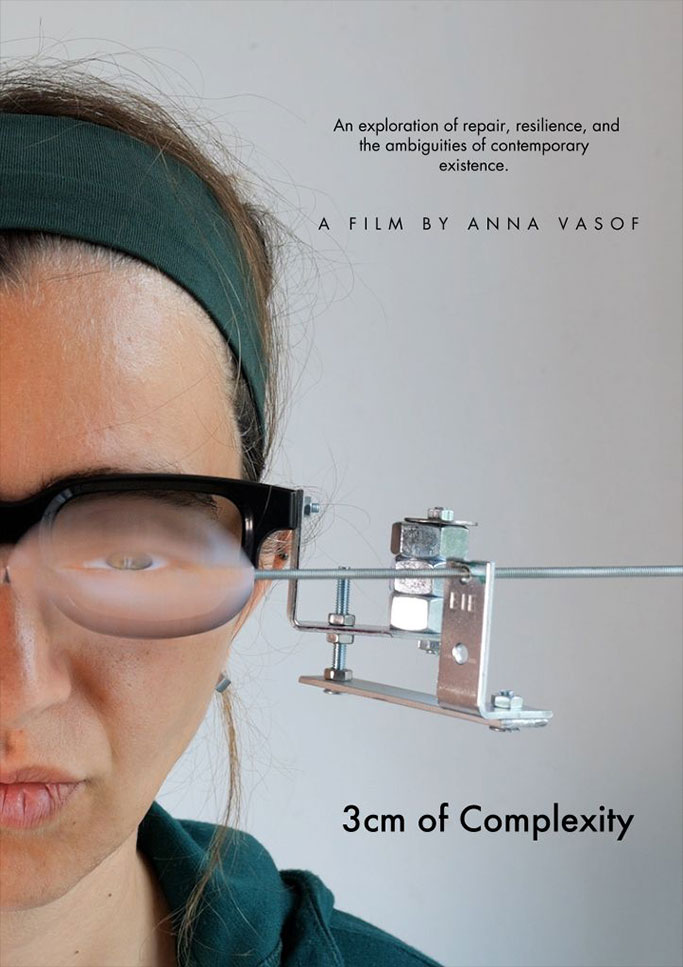
  3. 3 cm of Complexity, Anna Vasof
  4. 100 years ahead, Michael Gigintis
  5. MITCH, Gevi Dimitrakopoulou
  6. Roots, Konstantinos Doxiadis
  7. Noi, Neritan Zinxhiria
  8. Fouetté, Dimitris Zouras
  9. He Who Once Was, Kostis Theodosopoulos
  10. The Outsider, Eftychia Iosifidou
  11. The patient 1789, Eirini Karagkiozidou
  12. Cold?, Andreas Kontopoulos
  13. Magdalena Hausen: Frozen Time, Yannis Karpouzis
  14. Beware of the Southern stars, Christos Karteris
  15. Hopepunk, Vasiliki Lazaridou
  16. Performer, Yannis Beretsos
  17. The wolves return, Stelios Moraitidis
  18. Requiem in Salt, Sylvia Nicolaides – Nicolas Iordanou
  19. A Thousand Leagues Under the Sea, Natassa Xydi
  20. PLANETS, Fili Olsefski
  21. The day we became heroes, Selini Papageorgiou
  22. You know the drill, Manos Papadakis
  23. Dust to dust, Dimitris Papathanasis
  24. Pirateland, Stavros Petropoulos
  25. LUDYAS, Akis Polizos
  26. GIVE ME 5 MINUTES, Marthilia Svarna
  27. Carcass, Makis Sebos
  28. ΝΙΚΗ, Savvas Stavrou
  29. Mikro Soma, Jon Simvonis
  30. AVANTAZ, Christos Tatsis
  31. Last Tropics, Thanasis Trouboukis
  32. Places Called Home, Dimitris Tsalapatis
  33. Nothing and everything, Lia Tsalta
  34. Fuit, Alexandros Chantzis
  35. Things Hidden since the Foundation of the World, Kevin Walker, Irene Zahariadis

The Jury of the National Competition Program

Maria Kallimani was born in Aigio, Greece, in 1969. She graduated from the National Kapodistrian University of Athens (Archaeology and History of Art) and completed her studies at the Drama School of Empros Theatre, four years later. She has collaborated with distinguished Greek and foreign directors on the Free Stage, at the National Theatre, and at the Athens and Epidaurus Festival. She has starred in both feature and short films of leading Greek filmmakers of the new generation and has participated in several international film festivals, such as Venice, Biennale, Toronto, etc. In 2015, she received the Best Actress Award of the Hellenic Film Academy for the lead role in the film At Home, by Athanasios Karanikolas. She was also nominated for Best Actress at the Hellenic Film Academy Awards for her role in the Knifer, by Yiannis Economides (2010), in South, by Tassos Boulmetis (2015), in Meat, by Dimitris Nakos (2025), and was nominated for Best Supporting Actress at the Hellenic Film Academy Awards for her role in Ekei pou zoume, a film by Sotiris Goritsas (2022). Maria has starred in TV series and, recently, she participated in the theatre production of Tenessee Williams’ play The Glass Menagerie, directed by Antonio Latella, hosted at Theatro Technis Karolos Koun-Frynichou, (world premiere at Naples International Festival, October 2024). This summer, Maria Kallimani takes part in the film production Electra 7, directed by Argyris Papadimitropoulos in which seven distinguished film auteurs, both women and men, have been selected to represent the diverse landscape of contemporary Greek filmmaking and contribute their unique perspectives to this imaginative cinematic relay.

Elsa Lekakou is an acclaimed Greek actress. Her screen work spans both television and cinema, from her debut in the Amazon series Greek Salad (2023) to acclaimed short films such as Copa Loca (2017), which premiered in the Directors’ Fortnight at Cannes, and Brutalia, Days of Labour (2021), which was in official competition at Cannes’ Critics’ Week and won the Canal+ Award for Best Short Film. Her feature film credits include Broadway (2022), Killerwood (2024), and the award-winning Kyuka: Before Summer’s End (2024), which premiered in Cannes’ ACID section. For her performance in Kyuka, she was honoured with the Best Actress Award by the Hellenic Film Academy (Iris Awards).

Dimosthenis Papamarkos was born in Malessina, Central Greece. He studied Classical History at the University of Athens and the University of Oxford. His work includes novels, short story collections, graphic novels, as well as screenplays and theatre plays. His latest short story collection, Gjak (Blood), won in 2015 the Academy of Athens Literary Prize and the Critics’ Circle Award of the literary magazine O Anagnostis [The Reader]. It has since been translated in Russian, German and Italian, and has been adapted three times for the theatre. Dimosthenis has also collaborated, both as a writer and dramaturg, with Greece’s most prominent theatre stages (National Theatre of Greece, State Theatre of Northern Greece, Onassis Stegi) and the Theatre of Stuttgart.

Andreas Sinanos was born in Andravida. He studied Film at the Stavrakos Film School in Athens. He is a member of the European Film Academy (EFA), the French Society of Cinematographers (AFC), and the Greek Society of Cinematographers (GSC). He has worked as director of photography on numerous films with directors such as Theo Angelopoulos, Michael Cacoyannis, Chris Marker, Hiner Saleem, Jeanine Meerapfel, Selma Baccar, Semih Kaplanoglu, Tayfun Pirselimoglu, and Özcan Alper. For The Crossing by Vasiliki Iliopoulou and True Blue by Yiannis Diamantopoulos, he received the Cinematography Award from the Hellenic Ministry of Culture. He was also awarded at the Thessaloniki Film Festival for Olga Robards by Christos Vakalopoulos, Equinox by Nikos Kornilios, and Master of the Shadows by Lefteris Xanthopoulos. For Memories of the Wind by Özcan Alper, he won an award at the Antalya Film Festival. For the same film, as well as Sideway by Tayfun Pirselimoglu, he was honoured by the Turkish Film Critics Association (SIYAD). For KERR by Tayfun Pirselimoglu, he received the Best Cinematography Award at the Asian Film Festival in Los Angeles. For Dilsiz by Murat Pay, he won awards at the Kayseri, Malatya, and Bosphorus Film Festivals in Istanbul. His collaborations with Theo Angelopoulos include The Suspended Step of the Stork, Ulysses’ Gaze, Eternity and a Day, The Weeping Meadow (nominated for Best Cinematography by the European Film Academy), The Dust of Time, Three Minutes (To Each His Own Cinema), and the unfinished film The Other Sea.

Angelos Frantzis is a film director and screenwriter. He was born in Athens and studied Film at INSAS in Brussels. His films (Polaroid, A Dog’s Dream, In the Woods, Symptom, Still River, Eftyhia, Murphy’s Law) have received awards and screened at numerous international festivals. He has also worked for several years as a film critic, and has created mixed-media works presented at the Venice Architecture Biennale, the Athens Festival, and the Onassis Stegi.